

Back to the Future: 7 symbols every fan recognizes and what they mean
Jose Antonio Carravilla BlancoFew films have left behind so many recognizable objects as Back to the Future. You only need to see a DeLorean, a speedometer hitting 88 MPH, or a license plate with the word OUTATIME to immediately think of Marty McFly and Doc Brown.
But why are they important? We review seven Back to the Future symbols that ended up becoming part of popular culture.
1. The DeLorean: the most famous time machine in cinema
The DeLorean DMC-12 is likely the great icon of the saga.
Doc Brown transforms this peculiar sports car with gull-wing doors into a machine capable of time travel. Its metallic body and futuristic look made it perfect for representing impossible technology from the future.
The film achieved something even more difficult: turning a real car into an inseparable symbol of science fiction cinema.
2. OUTATIME: the license plate that says it all
Another image that is hard to forget is the DeLorean's license plate with the inscription OUTATIME.
It is a wordplay on the English expression out of time, which can be interpreted as "lacking time" or "beyond time."
A small license plate thus managed to summarize in a single word the entire idea of a film about traveling between the past, present, and future.

3. Why does the DeLorean need to reach 88 MPH?
To activate time travel, the DeLorean must reach exactly 88 miles per hour, approximately 140 km/h.
Since then, the number 88 has become one of the most recognizable visual codes of the film. A speedometer stuck on that figure is enough for any fan to understand the reference.
Interestingly, 88 MPH does not correspond to any real scientific theory: it is part of the rules created for the film's universe.
4. The flux capacitor
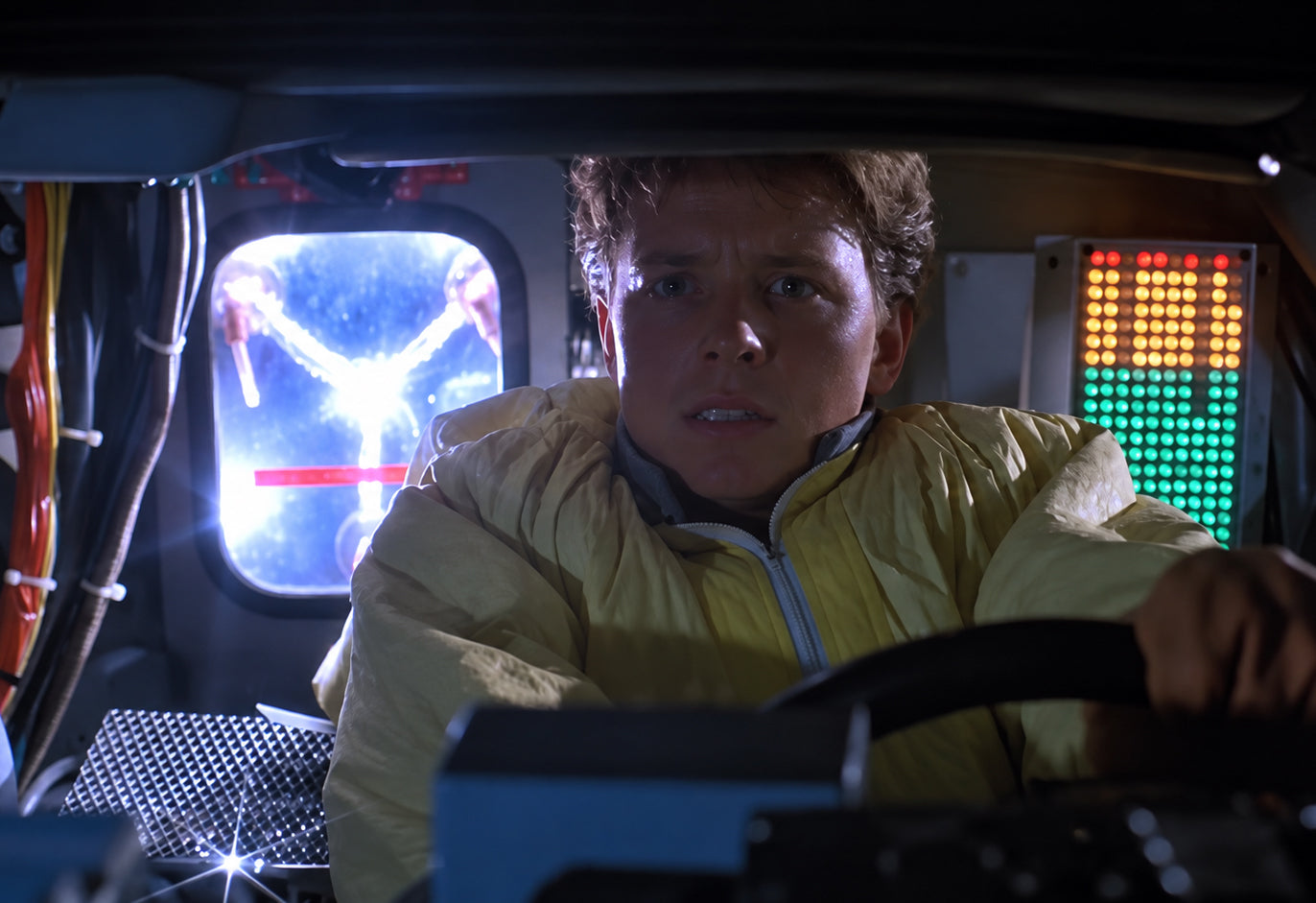
If the DeLorean is the body of the time machine, the flux capacitor is its heart.
The "Y"-shaped device located behind the seats is the element that makes time travel possible when the necessary conditions are met.
In the original version it is called the flux capacitor, but the Spanish dubbing popularized the peculiar name "condensador de fluzo", which ended up becoming a very recognizable reference among Spanish fans in its own right.
5. The 1.21 gigawatts
Reaching 88 MPH is not enough. The capacitor needs a huge amount of energy: 1.21 gigawatts.
In the first film, obtaining that energy becomes one of the fundamental problems for Marty to return from 1955.
The combination of 88 MPH + 1.21 gigawatts + flux capacitor ended up creating the visual formula for time travel in Back to the Future.
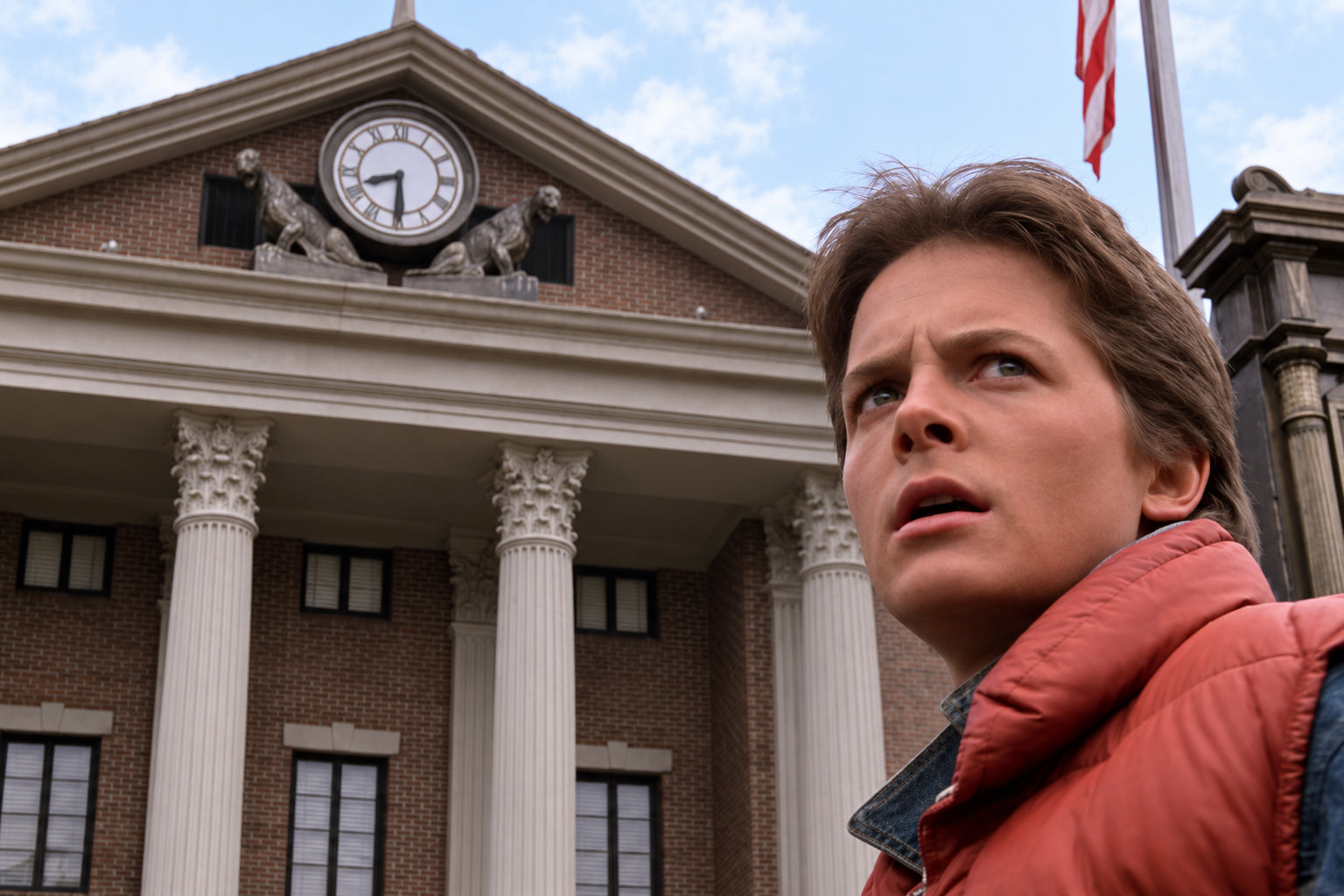
6. The Hill Valley clock tower
The Hill Valley clock tower is much more than a setting.
The lightning bolt that strikes the clock in 1955 provides the energy Marty and Doc need to try to send the DeLorean back to 1985.
That is why the tower and the time stopped on its clock became another of the fundamental images of the film: a frozen instant that connects two different eras.
7. The hoverboard: the object that made us dream of the future
When Marty arrives in the year 2015 in Back to the Future Part II, one of the objects that caught the most attention was the hoverboard: a board similar to a skateboard capable of moving by floating above the ground.
Its colorful, futuristic design quickly made it one of the great icons of the second film.
For years, the hoverboard also fueled one of the great fantasies associated with the saga: the possibility that such technology would eventually actually exist.
Although our 2015 didn't end up looking exactly like the one imagined by the film, the hoverboard remains one of the most recognizable images of the future according to Back to the Future.
Bonus: why is October 21st Back to the Future Day?
Every October 21st, fans celebrate what is known as Back to the Future Day.
The date comes precisely from Back to the Future Part II: October 21, 2015 is the day to which Marty McFly, Doc Brown, and Jennifer travel from 1985.
That future imagined by the film left behind objects as well-remembered as the hoverboard, futuristic sneakers, and other technologies that made fans wonder for decades how much the film would actually get right.
Over time, October 21st ended up becoming an annual day of celebration for the saga's fans.

Why do we still recognize these symbols decades later?
Because Back to the Future managed to make its objects something more than simple props.
The DeLorean, 88 MPH, the flux capacitor, OUTATIME, the clock tower, or the hoverboard tell part of the story on their own. You don't need to show the protagonists or even the film's title to recognize it.
That capability explains why, decades after its 1985 release, its references continue to appear in collectibles, design, popular culture, and fashion.
At Siempre Original, we also reinterpret some of these icons. You can discover our collection of t-shirts inspired by Back to the Future.