

What do the symbols of Palestine mean? Flag, keffiyeh, watermelon, Handala, and key
Jose Antonio Carravilla BlancoThe flag, the keffiyeh, a watermelon, a child drawn from behind, or an old key appear frequently at demonstrations, on murals, on posters, and on social media related to Palestine.
But what do they really mean?
Behind these images lie decades of Palestinian history, identity, memory, and struggle. Some began as everyday objects and others were created by artists, but all have ended up acquiring a meaning that goes far beyond their appearance.
1. The Palestinian flag and its four colors
The flag of Palestine consists of three horizontal stripes—black, white, and green—and a red triangle. 🇵🇸
Its colors are part of what are known as the Pan-Arab colors and are historically linked to different periods and dynasties in Arab history.
The flag derives from the one used during the Arab Revolt of 1916 and was officially adopted by the Palestine Liberation Organization in 1964. It subsequently became the flag of the State of Palestine.
Today it is arguably the most recognizable visual symbol of Palestinian national identity.
2. The keffiyeh: from traditional garment to Palestinian symbol
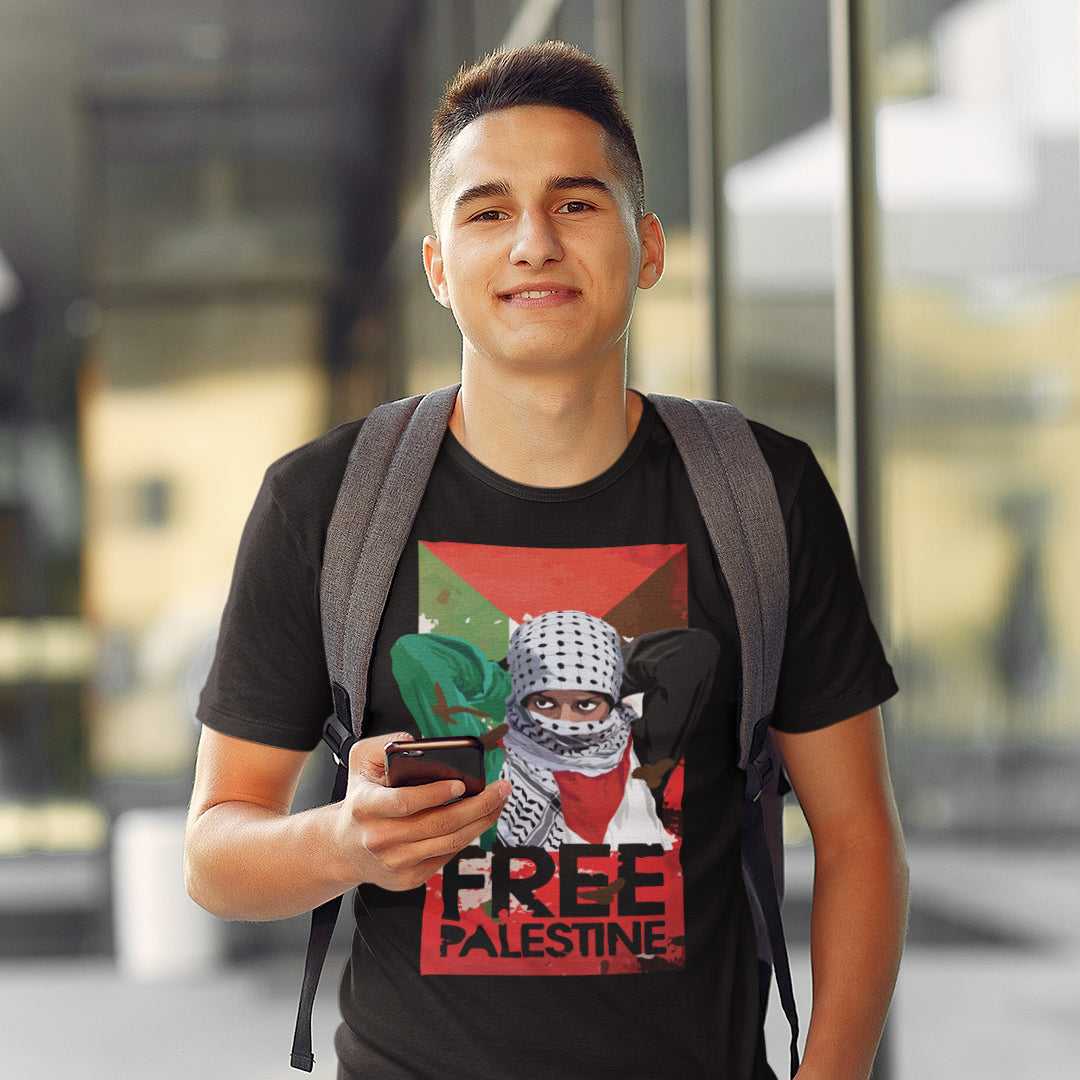
The Palestinian keffiyeh—also spelled kufiya or kufiyeh—is the well-known checkered scarf, especially recognizable in its black and white version.
Originally, it was a practical garment used in various parts of the Middle East to protect against the sun and weather conditions.
In Palestine, it took on political significance especially during the Arab revolt of 1936-1939, when its use spread among different sectors of the population.
Decades later, it became closely associated with Yasser Arafat and ended up becoming an internationally recognizable symbol of identity and solidarity with the Palestinian people.
3. Why is the watermelon a symbol of Palestine?
At first glance, it might seem strange for a watermelon to have political meaning. The explanation lies in its colors.
When you cut open a watermelon, you see precisely the red, green, white, and black of the Palestinian flag.
The fruit began to be used in Palestinian art and iconography as an alternative way to represent those colors, especially during periods when displaying the Palestinian flag was restricted.
Over time, the image transcended that context and became a symbol recognizable in its own right.
Social media has given it a new life: the 🍉 emoji is currently used in posts related to Palestine and has made an image used for decades recognizable to new generations.
4. Handala: who is the child seen from behind?
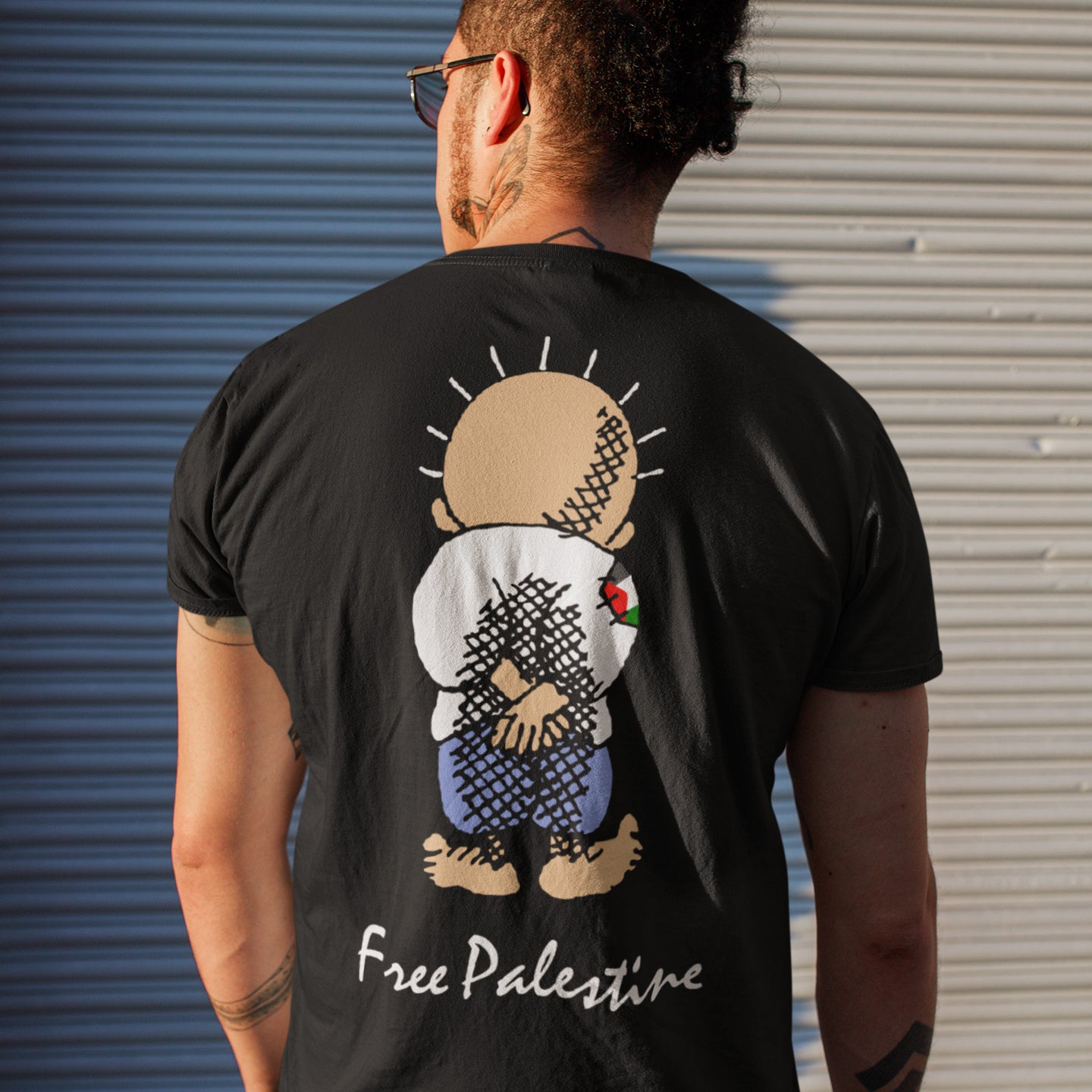
Another of the most distinctive symbols is Handala, a small barefoot child who is usually shown from behind, with hands clasped behind his back.
He was created in 1969 by the Palestinian cartoonist Naji al-Ali and adopted his characteristic pose from behind a few years later.
Handala is ten years old, the age his creator was when he was displaced from Palestine in 1948.
Al-Ali decided that the character would remain that age forever until he could return to his homeland. His bare feet and simple clothes also reflected his identification with the most disadvantaged people.
Over time, Handala became one of the great graphic symbols of Palestinian identity. He can be found on murals, illustrations, posters, jewelry, and all types of artistic expressions.
5. The Palestinian key and the memory of home
An old key is another symbol that appears repeatedly in Palestinian iconography.
Its origin is linked to the 1948 Nakba, the name by which Palestinians refer to the mass displacement that occurred during the creation of the State of Israel and the 1948 war.
Many families kept the keys to the homes they left behind, and some were subsequently passed down from generation to generation.
That is why the key went from being an everyday object to representing the lost home, family memory, and the hope of return.
Today, huge representations of these old keys can be seen on monuments, works of art, and at Palestinian demonstrations.
From everyday objects to universal symbols
One of the most interesting things about these symbols is that many began as completely everyday elements: a scarf, a fruit, or a house key.
History caused them to acquire another meaning.
The flag represents national identity; the keffiyeh, identity and solidarity; the watermelon turned four colors into a visual code; Handala transformed a cartoon into an internationally recognizable character; and the key keeps the memory of lost homes alive.
That is why they continue to appear in art, posters, graffiti, demonstrations, and also on activist clothing: they allow an idea to be conveyed through an image that can be recognized immediately.
At Siempre Original, some of these symbols are part of our activist designs. If you want to see them, you can discover our Palestine t-shirt collection.