

7 Christian symbols and their meaning: from the cross to the Sacred Heart
Jose Antonio Carravilla BlancoA cross, a fish drawn with two lines, a dove, or a heart surrounded by thorns may seem like very different images. However, they are all part of a visual language that Christianity has been using for centuries.
Some symbols recall moments from the life of Jesus; others represent concepts such as the Holy Spirit, the love of Christ, salvation, or eternity.
These are seven of the most recognizable Christian symbols and what they mean.
1. The cross: the great symbol of Christianity
The cross is probably the most recognizable Christian symbol in the world.
Its meaning stems from the crucifixion of Jesus, but for Christianity, it does not represent only suffering and death. It is also linked to the resurrection and, therefore, to ideas such as salvation, hope, and victory over death.
That is why we find crosses practically since the first centuries of Christianity and in many different forms: Latin, Greek, Celtic, patriarchal, and many others.
There is also an important visual difference: while a cross may appear empty, a crucifix depicts Jesus on it.
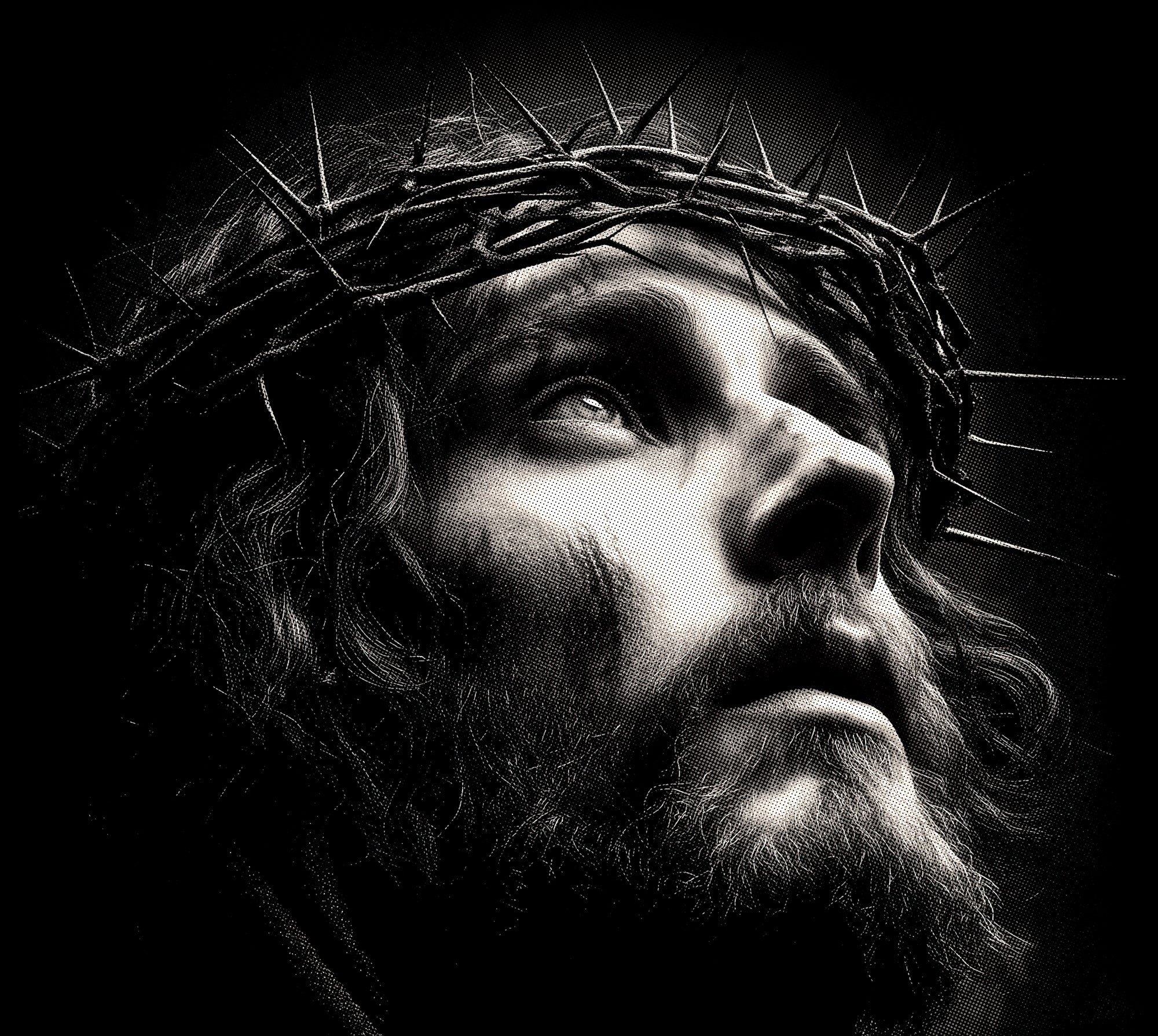
2. The crown of thorns: suffering and royalty
The crown of thorns appears in the accounts of the Passion of Christ. Roman soldiers placed it on Jesus' head while mocking him, calling him "King of the Jews."
Precisely for this reason, it contains a strong contrast: a crown, a symbol of royalty, made of thorns and turned into an instrument of humiliation and suffering.
In Christian art, it came to represent, in particular, the Passion, sacrifice, and suffering of Christ.
3. INRI: what do the letters on Jesus' cross mean?
Above many depictions of the crucifixion, four letters appear: INRI.
They are the initials of the Latin expression Iesus Nazarenus Rex Iudaeorum, which means "Jesus of Nazareth, King of the Jews."
According to the Gospels, the inscription was placed on the cross to indicate the charge for which Jesus had been condemned.
Over the centuries, those four letters became one of the most recognizable elements of crucifixion iconography.
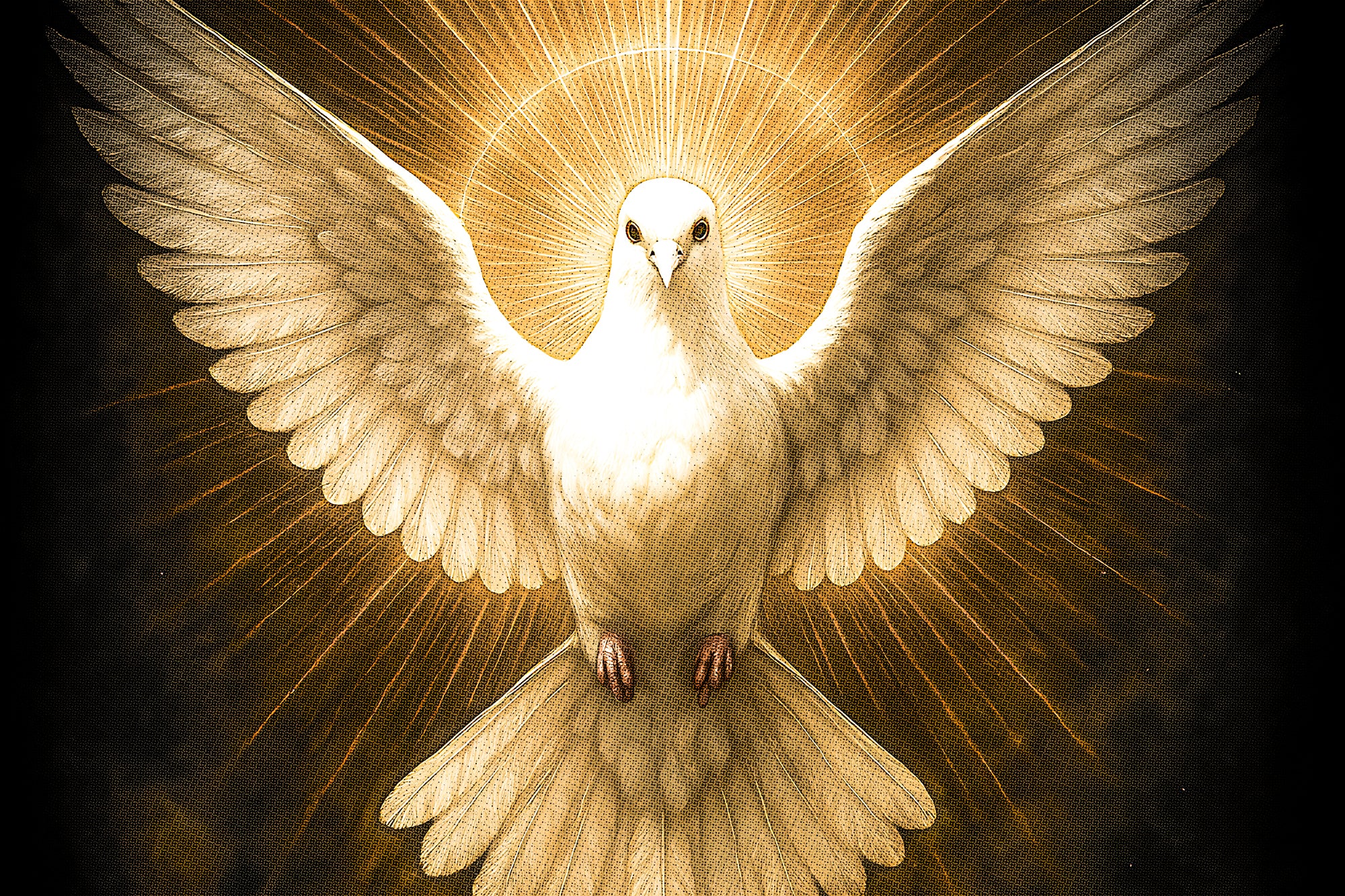
4. The dove: symbol of the Holy Spirit
A white dove appears frequently in churches, stained glass windows, paintings, and religious depictions.
In Christianity, it is especially linked to the Holy Spirit.
The association comes from the account of Jesus' baptism, where the Gospels describe the Spirit of God descending upon him like a dove.
The same bird is also related to peace through the biblical story of Noah and the flood, in which a dove returns with an olive branch.
Thus, an extremely simple image ended up representing concepts such as the Holy Spirit, peace, and divine presence.
5. The Sacred Heart of Jesus
The Sacred Heart is one of the best-known images in the Catholic tradition.
It usually depicts the heart of Jesus surrounded by a crown of thorns, accompanied by a cross and, in many images, enveloped in flames.
But the heart is not intended to represent only a physical organ. Its main meaning is the love of Christ for humanity.
Catholic tradition itself explains the Sacred Heart as a symbol of Jesus' human and divine love, his mercy, and his sacrifice.
That is why the heart usually appears visible on Christ's chest: the intention is to represent through an image something that cannot be seen physically.
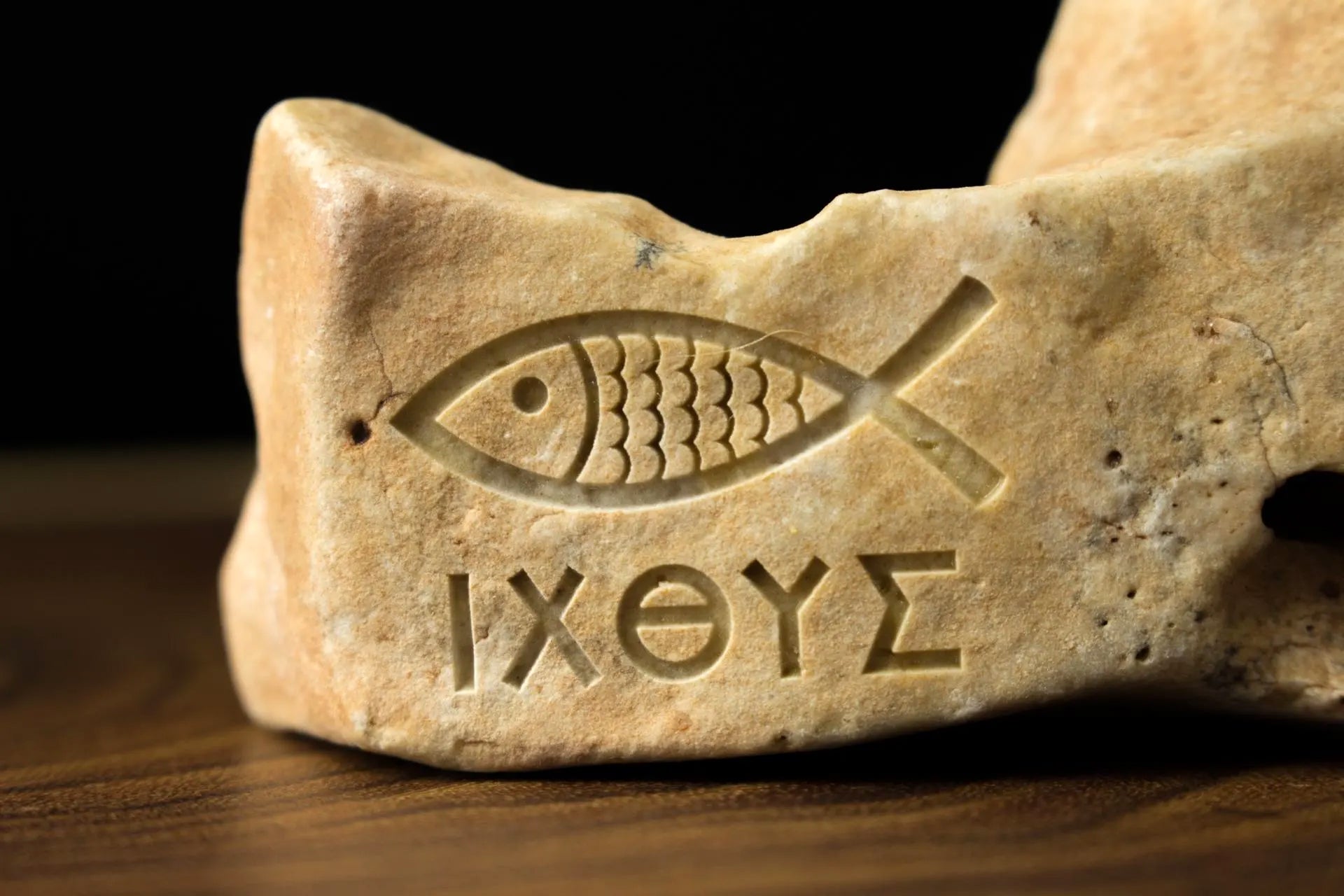
6. The Christian fish or Ichthys
Long before the cross became the most universal Christian image, early Christians already used other symbols. One of the oldest is the fish or Ichthys.
Its importance also lies in its Greek name: ΙΧΘΥΣ (Ichthys, "fish"). Its letters can form an acrostic of an ancient Christian confession that translates approximately as:
"Jesus Christ, Son of God, Savior."
The fish also appears repeatedly in the Gospels: in the multiplication of the loaves and fishes, the miraculous catches of fish, and Jesus' call to his disciples to become "fishers of men."
For all these reasons, the Ichthys ended up becoming one of the oldest images associated with Jesus Christ and his followers.
7. Alpha and Omega: the beginning and the end
The Greek letters Α and Ω —Alpha and Omega— frequently appear together in Christian art.
Alpha is the first letter of the Greek alphabet and Omega is the last. Used together, they represent the beginning and the end.
The symbol comes especially from the Book of Revelation, where the expression "Alpha and Omega" is used to express divine eternity and sovereignty.
That is why both letters can be found on crosses, altars, churches, manuscripts, and works of Christian art.
Visually, it is a very simple but powerful idea: everything begins and ends in God.
Why does Christianity use so many symbols?
Because an image can communicate a complex idea immediately.
The cross speaks of sacrifice and salvation; the heart, of love; the crown of thorns, of the Passion; the dove, of the Holy Spirit; and the fish, of Christian identity.
For centuries, these symbols have appeared in churches, paintings, sculptures, stained glass, medals, and manuscripts. Over time, they have also moved into new forms of visual expression.
But even if the aesthetic changes, the meaning behind them is what allows them to be recognized generation after generation.
From religious art to contemporary design
Christian symbols have not remained visually frozen in the past either.
The cross, the Sacred Heart, the crown of thorns, or the representation of the Holy Spirit can be found today reinterpreted through illustration, photography, graphic art, and contemporary styles.
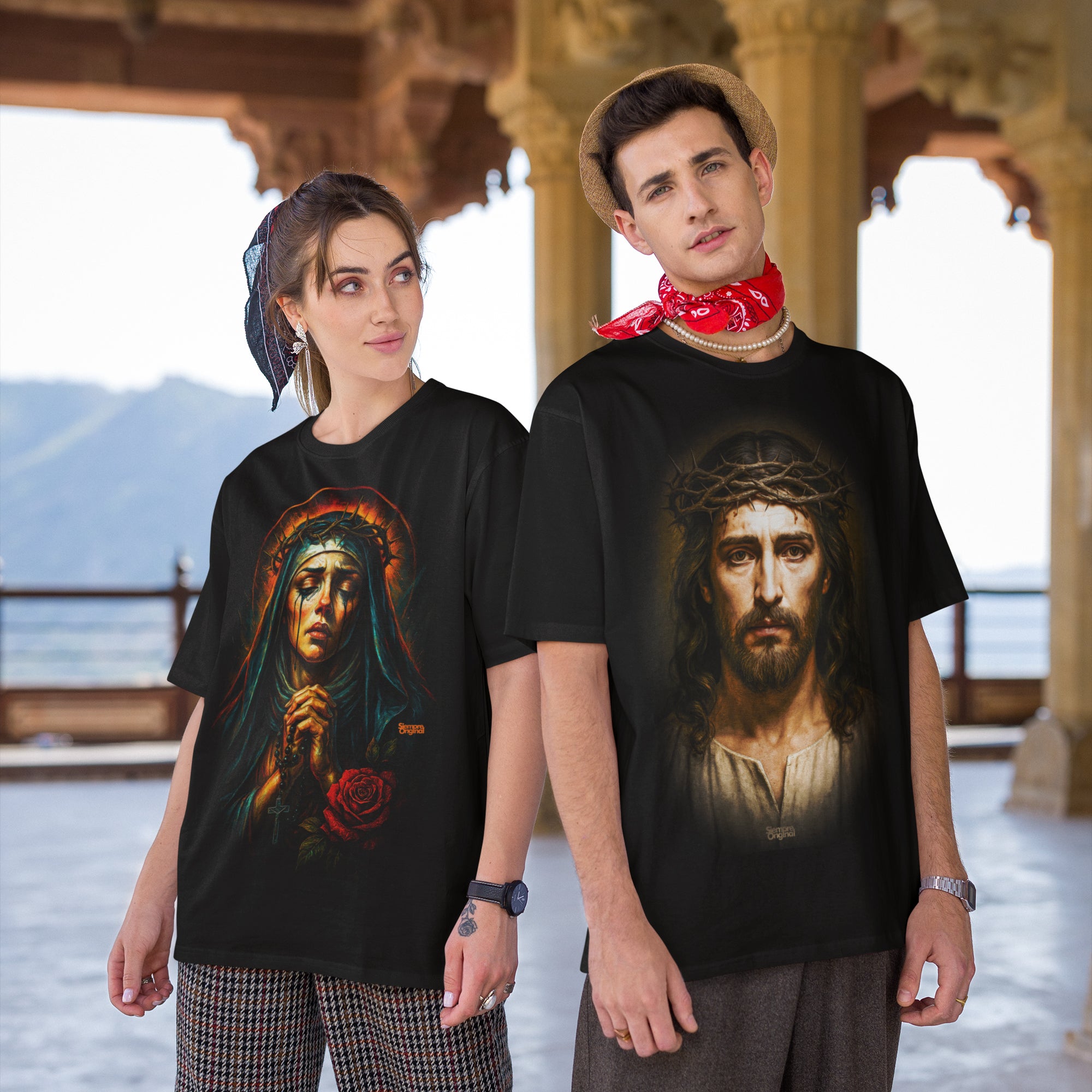
At SO Wear, we also start from some of these symbols and the figure of Jesus to create designs with a modern aesthetic, while maintaining their inspiration and meaning.
If you want to see our interpretations, you can discover the collection of Christian t-shirts inspired by Jesus.