

What was the test card and what was it really used for?
Jose Antonio Carravilla BlancoIf you grew up watching television in Spain a few decades ago, you likely remember an image formed by circles, grids, color bars, and gray tones that could remain on the screen for long minutes.
It was the Test Card.
For many children, it simply meant one thing: the programming hadn't started yet. But that strange image wasn't there for decoration or to make the wait more bearable. Each of its elements had a technical function.
What exactly was the Test Card?
The Test Card was a test signal used to check and calibrate television image and sound.
In an era when channels didn't broadcast 24 hours a day, the signal could be put on air before programming began so that both technicians and viewers could verify that everything was working correctly.
At TVE, the Test Card began to be used practically from the birth of television in Spain in 1956.
For years, it appeared regularly before broadcasts and ended up becoming, almost unintentionally, one of the most recognizable images in Spanish television.
What was the Test Card for?
Old televisions required many more manual adjustments than a modern screen.
With the help of the Test Card, aspects such as the following could be checked:
- Brightness and contrast
- Image definition
- Geometry and proportions
- Color and saturation
- Image centering
- Received signal quality
In other words, that image that seemed so strange was actually a calibration tool.
What did the circle, lines, and colors mean?
The Test Card was not designed at random.
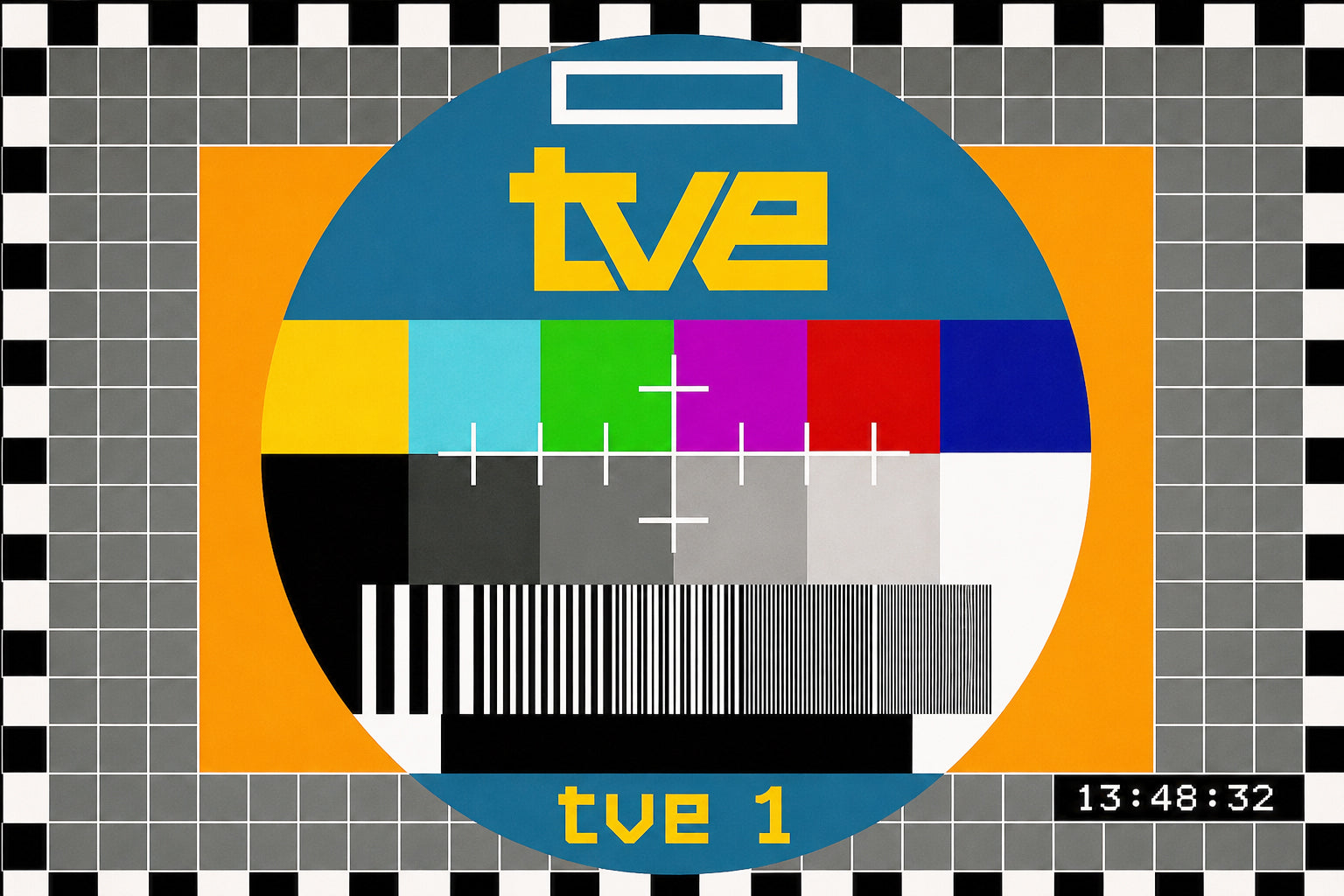
The central circle, for example, served to quickly check if the image geometry was correct. If it appeared distorted and looked like an oval, it could indicate that the screen needed adjustment.
The grids and lines allowed for checking the proportion, centering, focus, and potential image distortions.
The gray scales helped adjust brightness and contrast and verified that the television correctly distinguished between different levels of luminosity.
And with the arrival of color television, the color bars allowed for verifying and correctly calibrating color reproduction.
So, that sort of geometric drawing was, in reality, a set of visual tests gathered on a single screen.
Why was there music playing while it appeared?
Another inseparable memory of the Test Card was the music.
TVE usually accompanied it with instrumental, classical, and other styles of music. It wasn't just a way to fill the silence.
The sound also allowed for checking and adjusting the volume and audio reception of the television.
Thus, while the image helped calibrate the screen, the music made it possible to verify that the audio portion of the broadcast was also working correctly.
Why was there a Test Card if television broadcasts all day today?
Because television back then worked in a very different way.
Today we turn on the TV at three in the morning and find channels broadcasting movies, news, game shows, commercials, or reruns.
During the early years of TVE, however, programming occupied only a few hours a day.
Before the programs started, the Test Card could be broadcast for quite a while. In fact, RTVE recalls that it usually appeared approximately one hour before broadcasts began.
For several generations, it ended up becoming a kind of television countdown: when it appeared, you knew that sooner or later the programs would start.
Was the Test Card always in color?
No.
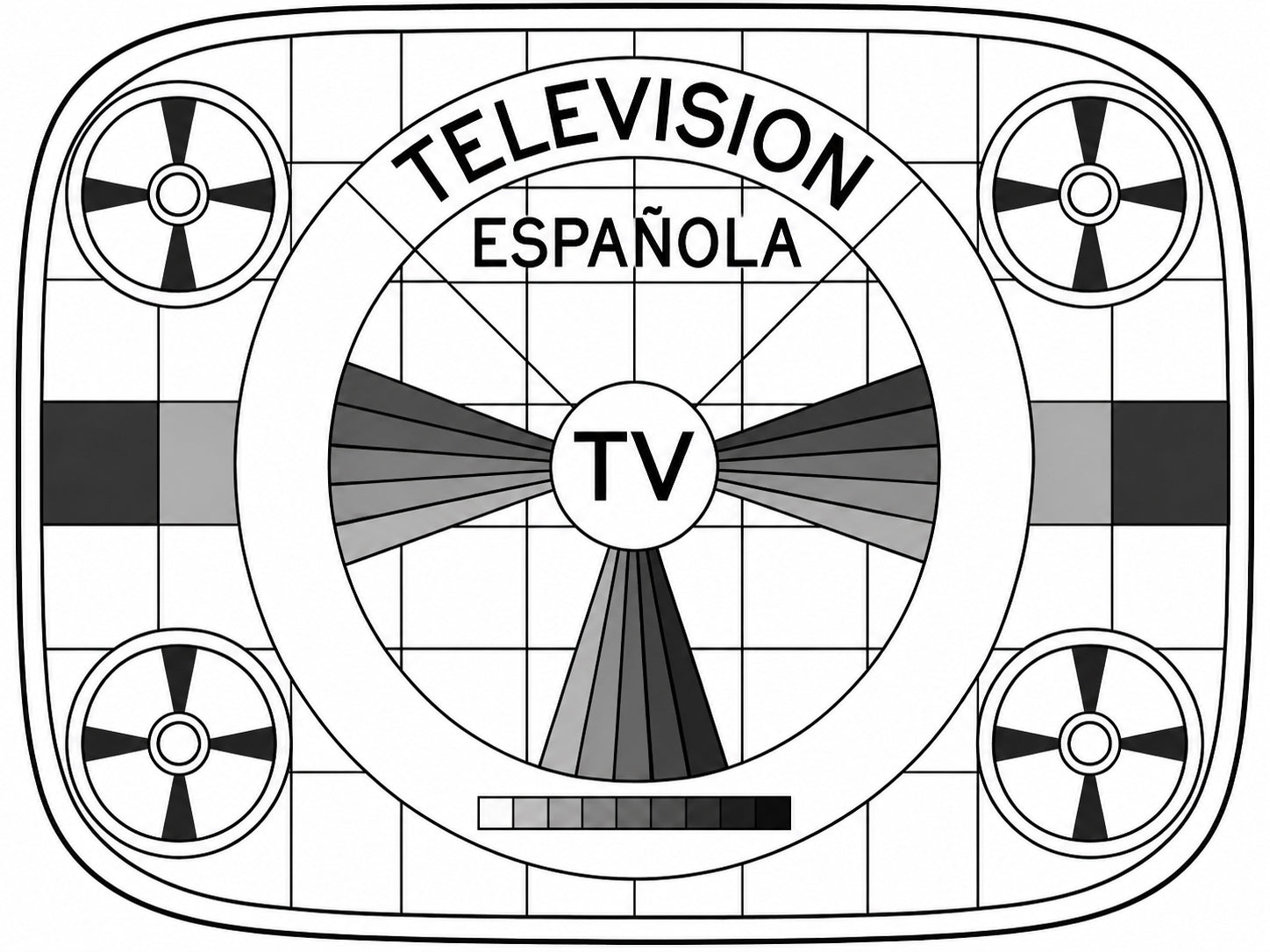
The first cards used by TVE were naturally in black and white, because that was how the broadcasts and televisions of that era were as well.
With the arrival of color television, patterns specifically designed to also check color reproduction were incorporated.
The well-known TVE color Test Card used a combination of a circle, grid, color bars, gray scales, and other technical elements that allowed for quickly checking different aspects of the signal.
When did the Test Card disappear from TVE?
Its disappearance came when the main reason for viewers to see it ceased to exist.
As channels began to broadcast 24 hours a day, there were no longer long periods between turning on the signal and the start of the programs.
The Test Card stopped appearing regularly on La Primera in 1995 and continued for a few more years on La 2, where it disappeared from regular programming at the beginning of 2001.
Test signals didn't disappear from the professional world, but they ceased to be part of the viewer's daily experience.
Why does the Test Card provoke such nostalgia?
Probably because it represents something that is hard to imagine today: waiting for television to start.
There were no on-demand platforms, internet videos, or hundreds of channels available at any time.
Sometimes you had to wait in front of a motionless screen until the cartoons, a movie, or the program you wanted to watch began.
For those who lived through that time, the Test Card became associated with childhood afternoons, the first color televisions, and a completely different way of consuming television.
What began as a technical tool ended up transforming over the years into a true icon of Spanish television nostalgia.
A technical image turned into a symbol of a generation
Perhaps the most curious thing about the Test Card is precisely that: it was never designed to become a cultural symbol.
Its circles, bars, and grids had a purely practical purpose.
But millions of people saw it so many times that that image ended up becoming part of their memories.
Today, seeing it again can immediately transport us to an era of tube televisions, few channels, and afternoons waiting for the programming to begin.
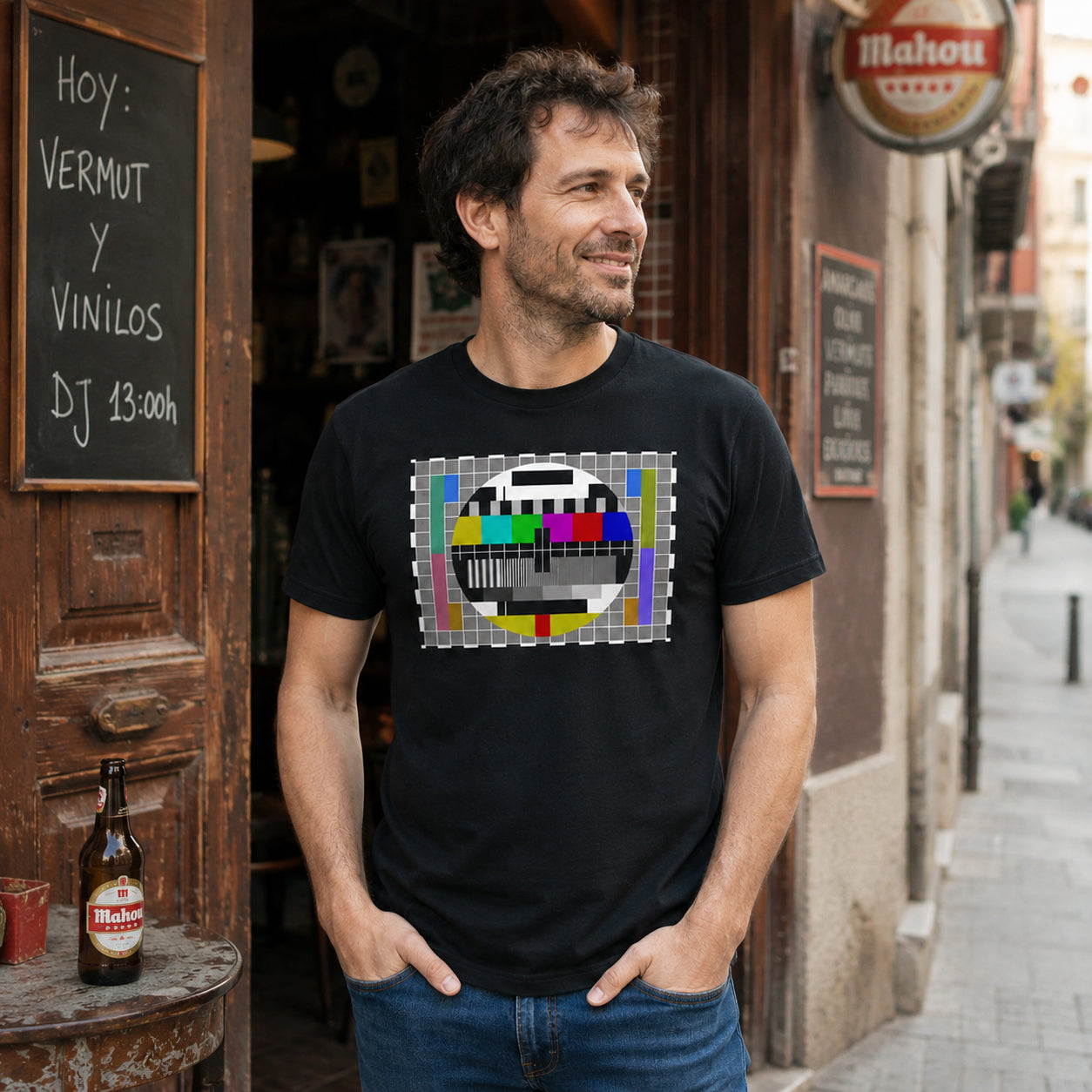
At Siempre Original, we have also recovered that memory in our EGB Generation and Retro collection, inspired by some of the icons that marked the childhood of several generations.