

The most iconic businesses from La que se avecina
Jose Antonio Carravilla BlancoA wholesaler who doesn't clean fish, a bar where crazy plans are born, an espeto vendor trying to bring the beach to Madrid, and a former bank employee who ends up starting a tuk-tuk company.
In La que se avecina, businesses have never simply been a way to earn a living. They are also the perfect setting for arguments, rivalries, failures, and some of the funniest situations in the series.
And the funny thing is that many of those fictional businesses have achieved something any advertiser would wish for: their names and logos remain recognizable even years later.
These are some of the most iconic businesses from La que se avecina, from Mirador de Montepinar to Contubernio 49.
1. Mariscos Recio: the sea at the best price
Probably no other business in the series has achieved as much fame as Mariscos Recio.
Its owner, Antonio Recio, played by Jordi Sánchez, has spent years reminding us that he is a wholesaler and that he doesn't clean fish.
His slogan, "Mariscos Recio, the sea at the best price," has become one of the most recognizable catchphrases in Spanish comedy.
But behind that apparent business success lies a business that perfectly reflects Antonio's personality: ambition, stinginess, authoritarianism, and an extraordinary ability to find trouble.
Much of its history is linked to Rosario Parrales, the employee who had to put up with the wholesaler's demands for years.
Even the protagonists' moves didn't manage to put an end to the business, whose fish shop reappears during the Contubernio 49 era.

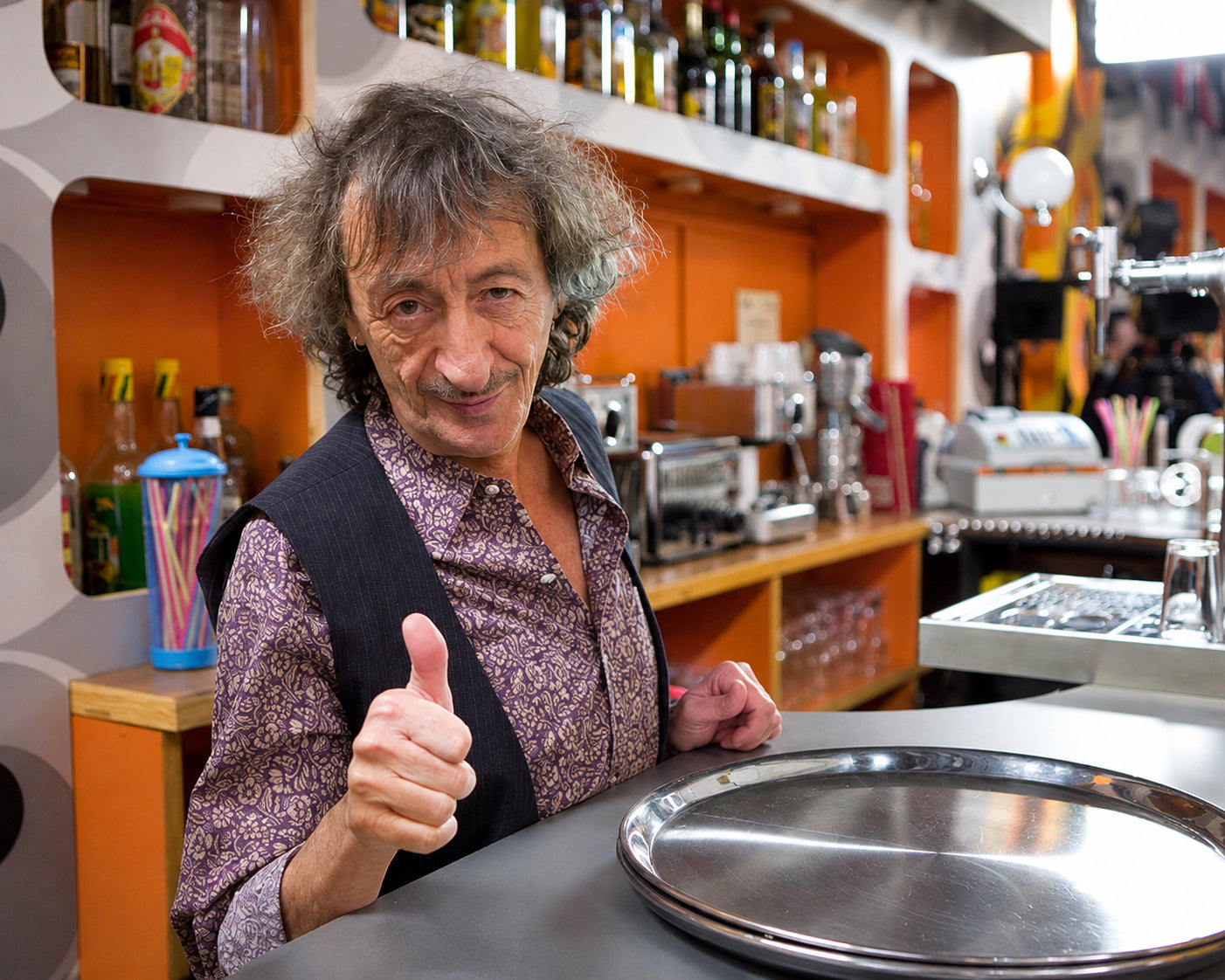
2. Max & Henry: the bar of the Leones de Montepinar
Every neighborhood needs a place to gather. And Mirador de Montepinar had one that was especially important: Max & Henry.
The bar was born from the partnership between Máximo Angulo, Maxi, and Enrique Pastor, whose names gave it its peculiar name.
But its real fame came thanks to the Leones de Montepinar, who turned the establishment into their regular meeting place.
There, over beers and arguments, Amador, Vicente, Leo, and the rest organized plans that almost never ended as they expected. Maxi, with his famous advice to keep a "cool head," became one of the group's great strategists.
The business went through different stages. The Leones themselves tried to run it as a cooperative, while the girls from the community even turned it into an establishment inspired by El bar Coyote.
But one of its most memorable managers was Fermín Trujillo, played by Fernando Tejero.
When Enrique decided to rent the premises, Lola covered the cost so her father could take over the business. Fermín took advantage of the opportunity to turn it into Autoespeto, a version of his particular Málaga-style espeto business, with takeaway food, a bar, and entertainment included.
And his ideas didn't stop there. Later on, he even turned the establishment into a low-cost funeral home, taking advantage of its proximity to a cemetery.
Between changes in management, improvised businesses, and endless meetings, the premises went through practically as many adventures as the neighbors themselves.
However, for many fans, it will always be the Max & Henry, the legendary bar of the Leones de Montepinar.
3. Tele Espeto: Fermín brings the beach to Montepinar
If there is anyone capable of finding a business opportunity in any situation, it is Fermín Trujillo.
The character played by Fernando Tejero comes from the Málaga coast with a very particular idea of hospitality.
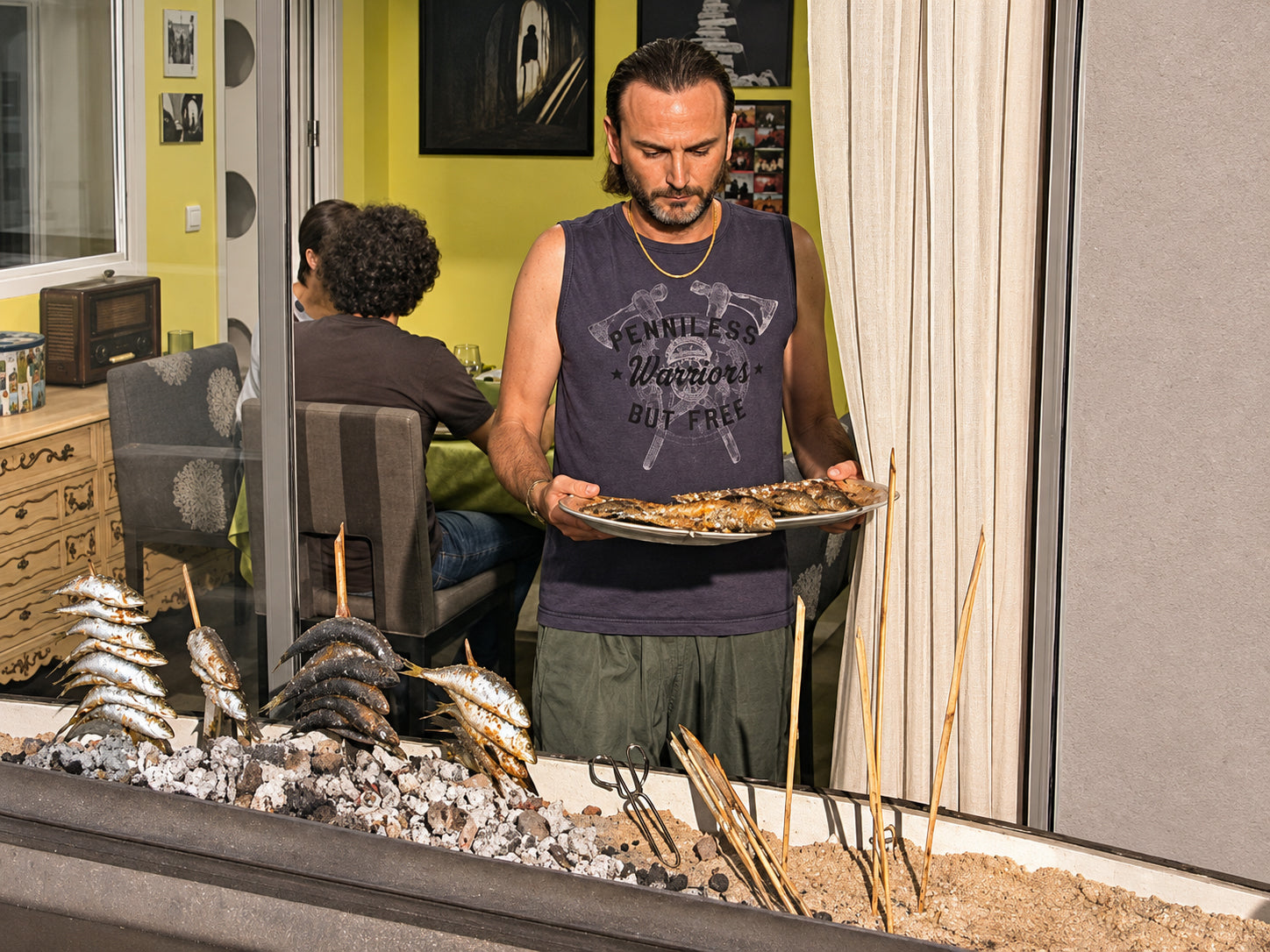
After receiving 1,500 euros from Javi to return to the beach, he decides to invest the money in something completely different: a boat to prepare espetos on Lola's terrace.
Thus Tele Espeto is born, an attempt to bring Málaga-style beach bars to a Madrid residential complex.
The idea perfectly summarizes Fermín's character: improvisation, cunning, and absolute confidence in his business talent.
Later on, he even rents the old Max & Henry and turns it into Autoespeto, a takeaway food establishment with a bar and entertainment included.
Two versions of the same obsession: that no one should be left without their sardines.
4. El Capón Sabrosón: from exploited employee to successful businessman
One of the biggest business surprises of recent seasons features Rosario Parrales.
For years, he was the Mariscos Recio employee who put up with Antonio's endless demands.
However, when he reappears in season 13, the situation has completely changed.
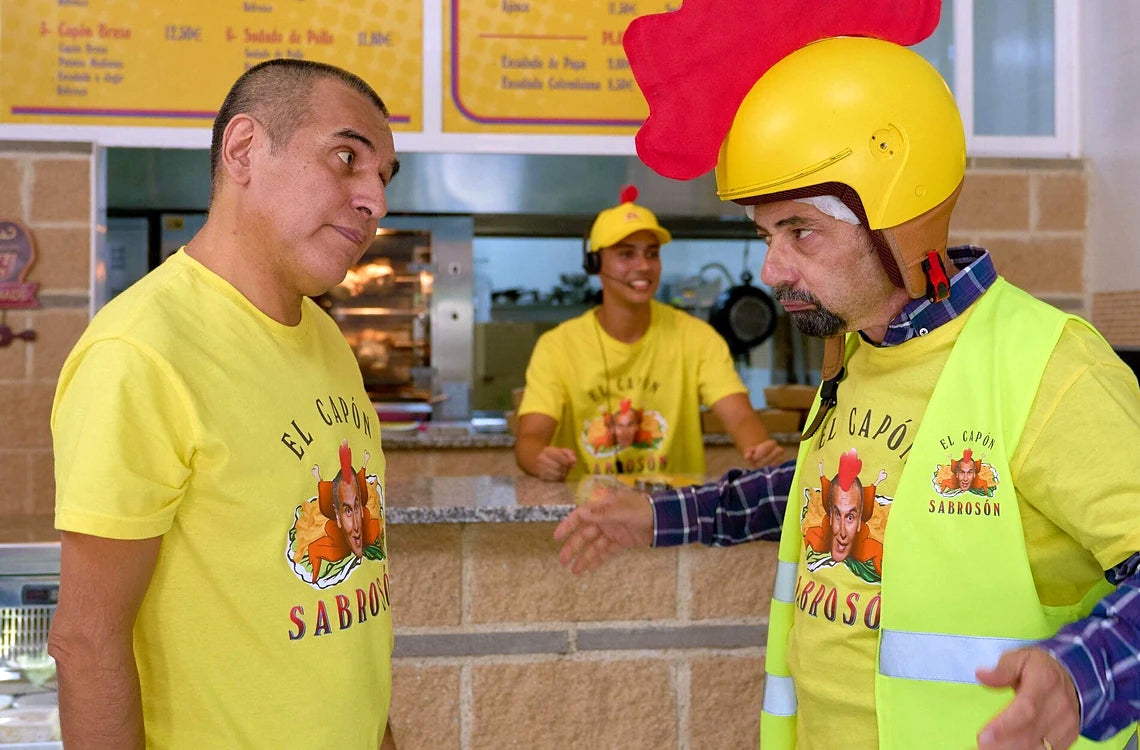
Parrales is now the owner of El Capón Sabrosón, a successful fast-food chain with four establishments.
But the real fun begins when Antonio Recio needs a job and turns to his former employee.
The wholesaler expects to get an important position, perhaps even become a manager.
The reality is quite different: Parrales offers him a job as a delivery driver.
Suddenly, the roles have been reversed. The former boss now has to take orders from who used to be his subordinate.
5. Retoucherie Yolanda Morcillo: the queen of sparkle
Not all businesses in La que se avecina are related to bars and food.
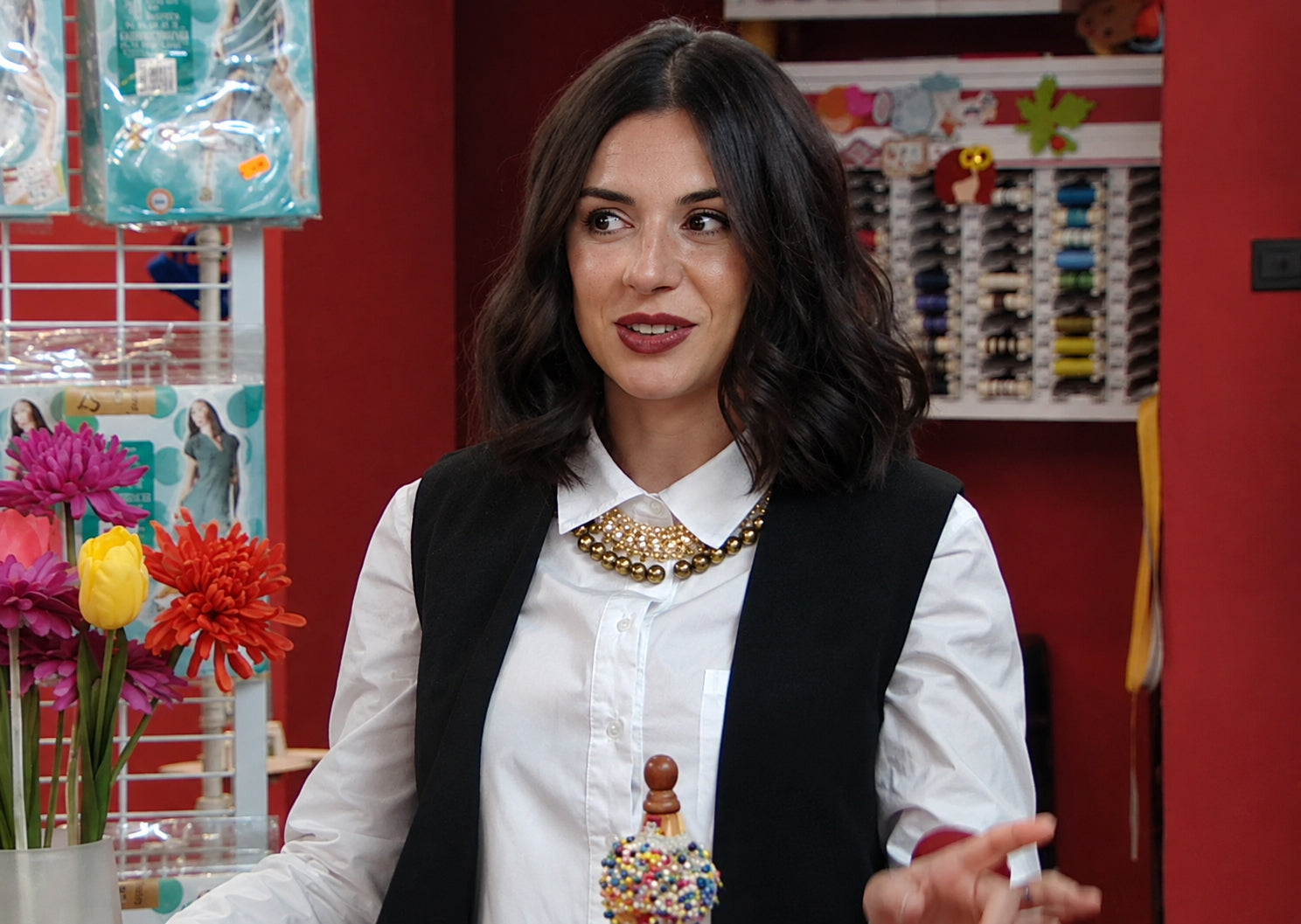
Yolanda Morcillo, Yoli, played by Miren Ibarguren, works in the world of sewing and clothing alterations.
Her establishment, Retoucherie Yolanda Morcillo, is linked to her passion for fashion and her aspirations as a designer.
Yoli is convinced she has the talent to go much further, although her daring outfits do not always inspire the same admiration among the neighbors.
The shop is also the setting for a key encounter in the series.
When Fina goes to the retoucherie to have a skirt altered, she is accompanied by Amador, who at the time works for her as Capitán Salami.
There, he meets Yoli for the first time, and one of the craziest relationships of his life begins.
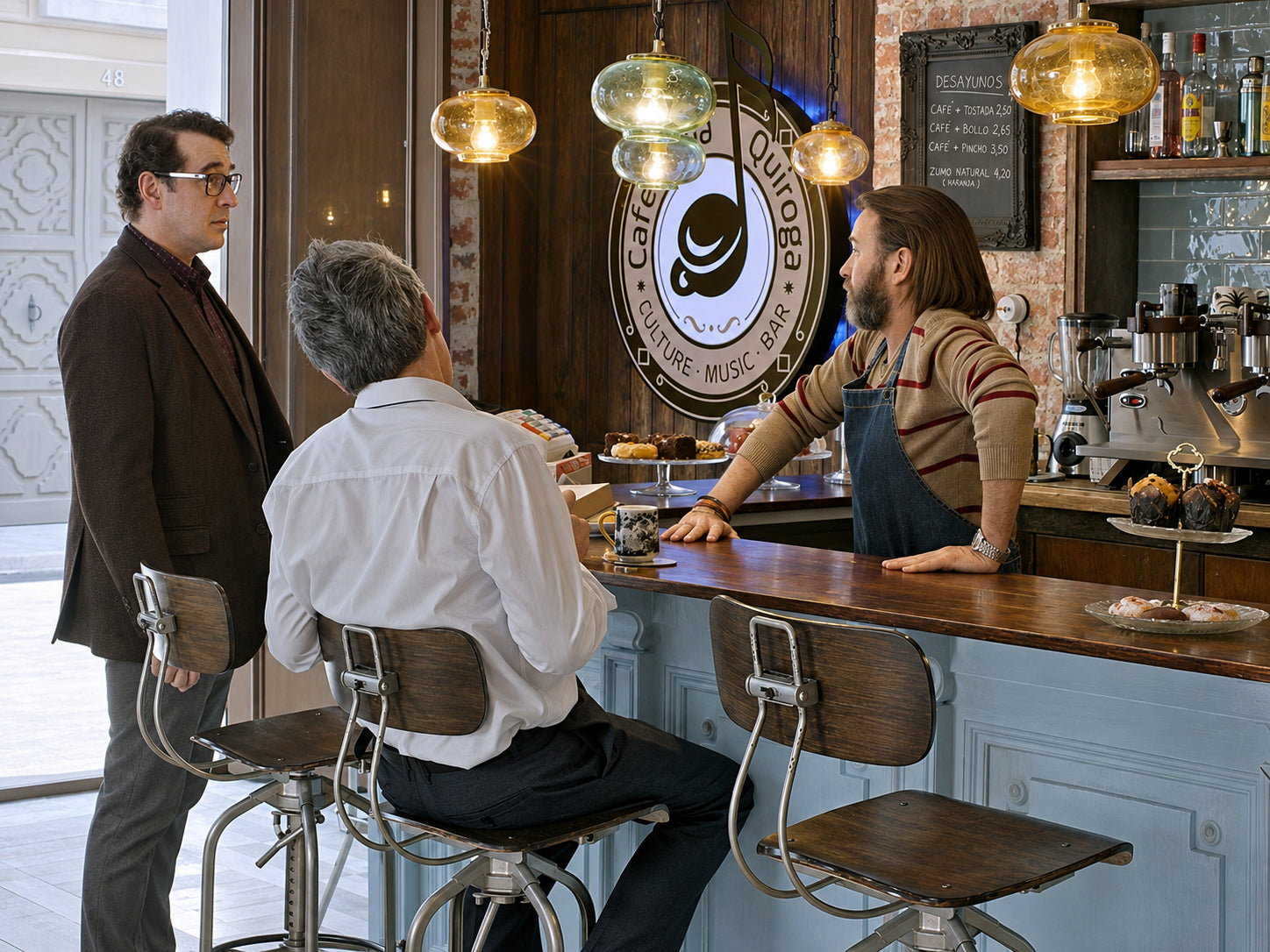
6. Cafebrería Quiroga: coffee, books, and culture in Contubernio 49
With the neighbors' arrival at Contubernio 49, a business appears that is quite different from those we knew in Montepinar.
Bruno Quiroga, played by Luis Merlo, decides to open a cafebrería: an establishment that combines a café, bookstore, and cultural activities.
His goal is to turn it into a reference point for lovers of culture and good conversation.
It even has a menu of breakfasts, snacks, and brunches, as befits a place located in an upscale area of Madrid.
But Bruno needs help running it.
And he ends up entrusting that responsibility to Fermín Trujillo.
The combination of a refined pianist and an espeto vendor accustomed to improvising is as unlikely as it is amusing.
Cafebrería Quiroga ends up becoming one of the main meeting places in the new stage of the series.
7. Tuk Tuk Rivas: Amador becomes a businessman
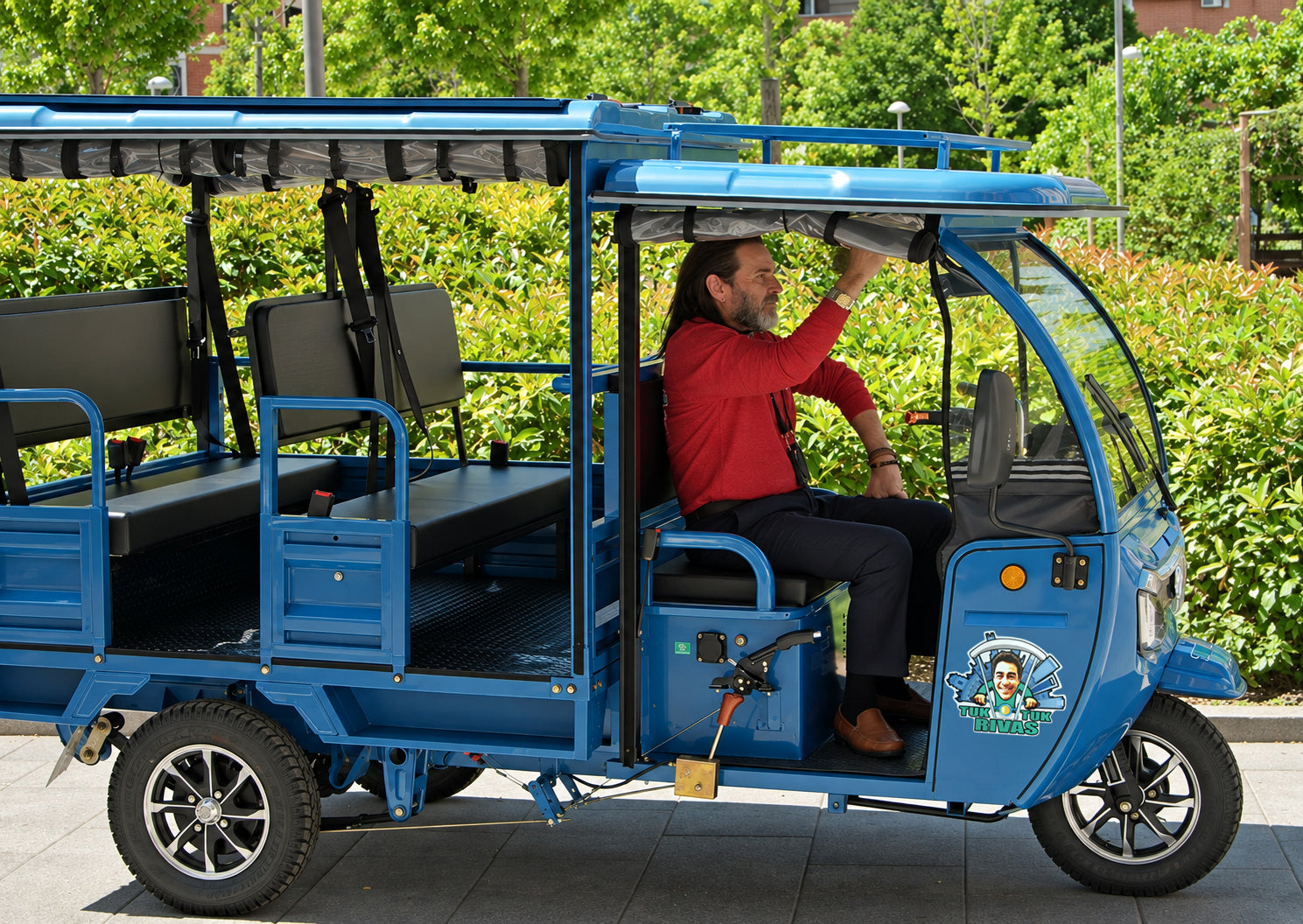
After going through countless jobs and financial problems, Amador Rivas achieves something that seemed impossible: running a successful business.
In season 16, he appears at the helm of Tuk Tuk Rivas, a company dedicated to providing sightseeing tours in three-wheeled electric vehicles.
The project is funded by Bruno Quiroga, who ends up suffering the consequences of his partner's peculiar business ideas.
The company is so successful that it needs to expand its activity and hire workers.
Among them is Coque Calatrava, who leaves his job as a doorman to join Amador's business, causing Antonio Recio's indignation.
The contrast is especially amusing: the former bank employee who spent years looking for money now has to learn to manage staff and serve tourists.
Of course, business success doesn't mean that Amador has stopped being Amador.
8. Capitán Salami: Amador earns a living however he can
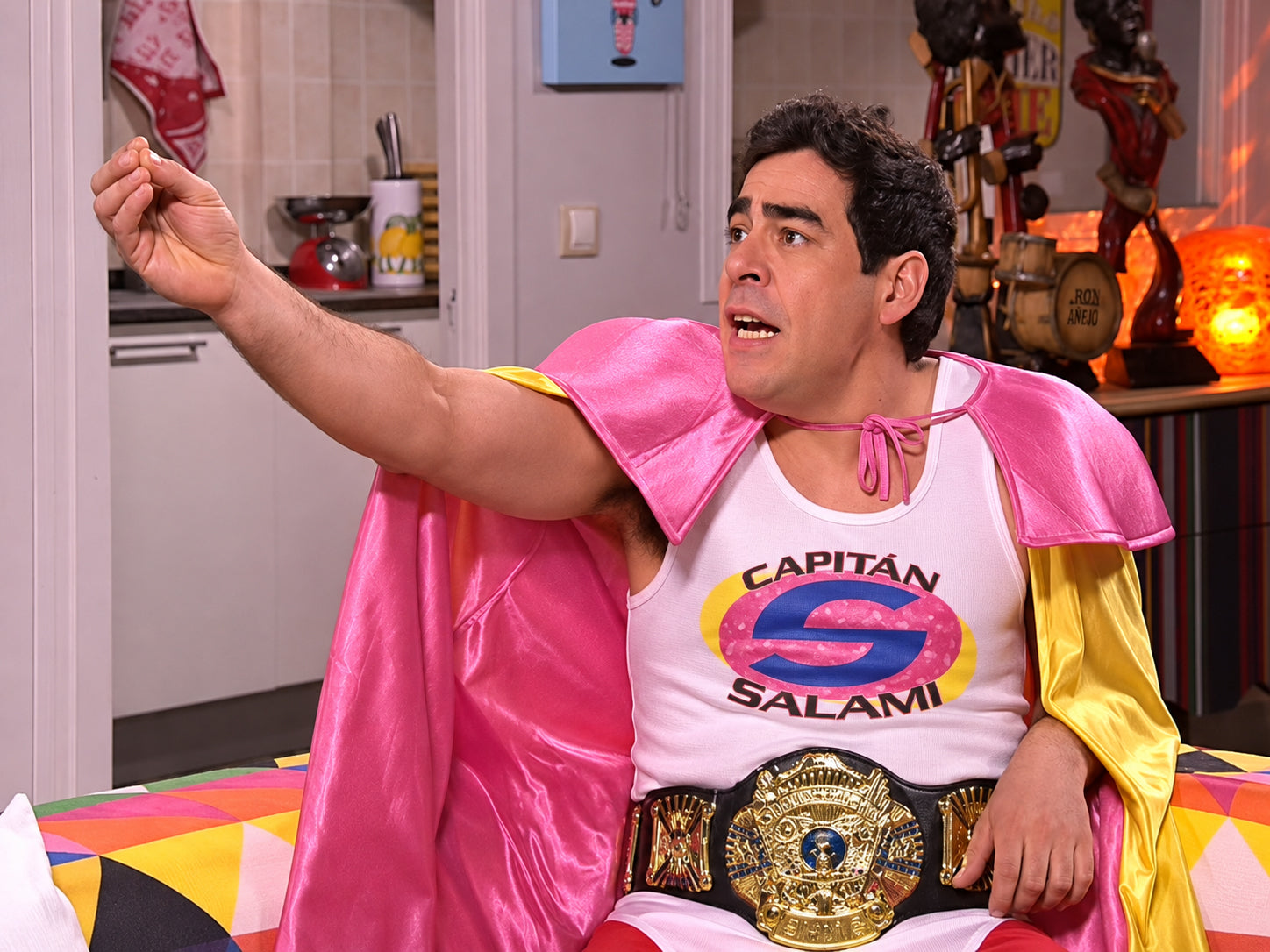
Before becoming a transport businessman, Amador had already tried to earn money by exploiting other rather peculiar talents.
One of his most memorable characters is Capitán Salami, the stage name he uses in his shows as a stripper and male companion.
During different seasons, he tries to earn an income performing for different audiences, including the residents of a nursing home.
His activity does not constitute a business like Mariscos Recio or Tuk Tuk Rivas, but it does represent one of his most recognizable professional adventures.
In fact, years later, he tries to revive the character when he needs money again and looks for work at a strip club.
Other crazy businesses from La que se avecina
These eight names do not exhaust the neighbors' business imagination.
Antonio Recio even got Top Gamba up and running, an illegal street-selling business of fried shrimp cones to try to get money to pay a fine. One of his most questionable and disastrous ideas.
Amador also set up a mobile hot dog business under the name of Capitán Salchicha, although he decided to start selling without first obtaining the necessary licenses.
And in season 16, Martín Segurola also ventures into the hospitality industry by opening his own restaurant, further expanding the peculiar business landscape of Contubernio 49.
From Mariscos Recio to Tuk Tuk Rivas, the businesses in La que se avecina have something in common: their owners never allow a lack of experience or common sense to stop them from trying.
And perhaps that is why their names remain so recognizable.
At Siempre Original, we have recovered many of their logos and references in our La que se avecina t-shirt collection, for those who still remember the Leones' plans, Fermín's businesses, and the endless antics of Antonio Recio and Amador.
