

Naranjito: history and trivia about the Spain 82 mascot
Jose Antonio Carravilla BlancoA smiling orange, dressed in the Spain kit and accompanied by a football. Few images represent the nostalgia of the 80s as well as Naranjito, the official mascot of the 1982 Spain World Cup.
Today it is one of the great icons of Spanish popular culture, but when it was presented, not everyone received that peculiar footballer orange with enthusiasm.
Who created Naranjito? Why was an orange chosen? What other designs were almost turned into the mascot of Spain '82? And who were Clementina, Citronio, and Imarchi?
This is the story of Naranjito and some of the most surprising facts about the mascot of the '82 World Cup.
Who was Naranjito?
Naranjito was the official mascot of the Football World Cup held in Spain in 1982.
The character represented a humanized orange, smiling and dressed as a player for the Spanish national team, accompanied by a football.
Its simple appearance ended up becoming one of the most recognizable images of that championship and, over the years, a true symbol of Spain in the 80s.
The very presentation of the character even gave it a specific personality: at the time, Naranjito was described as a 12-year-old orange.
Who created Naranjito?
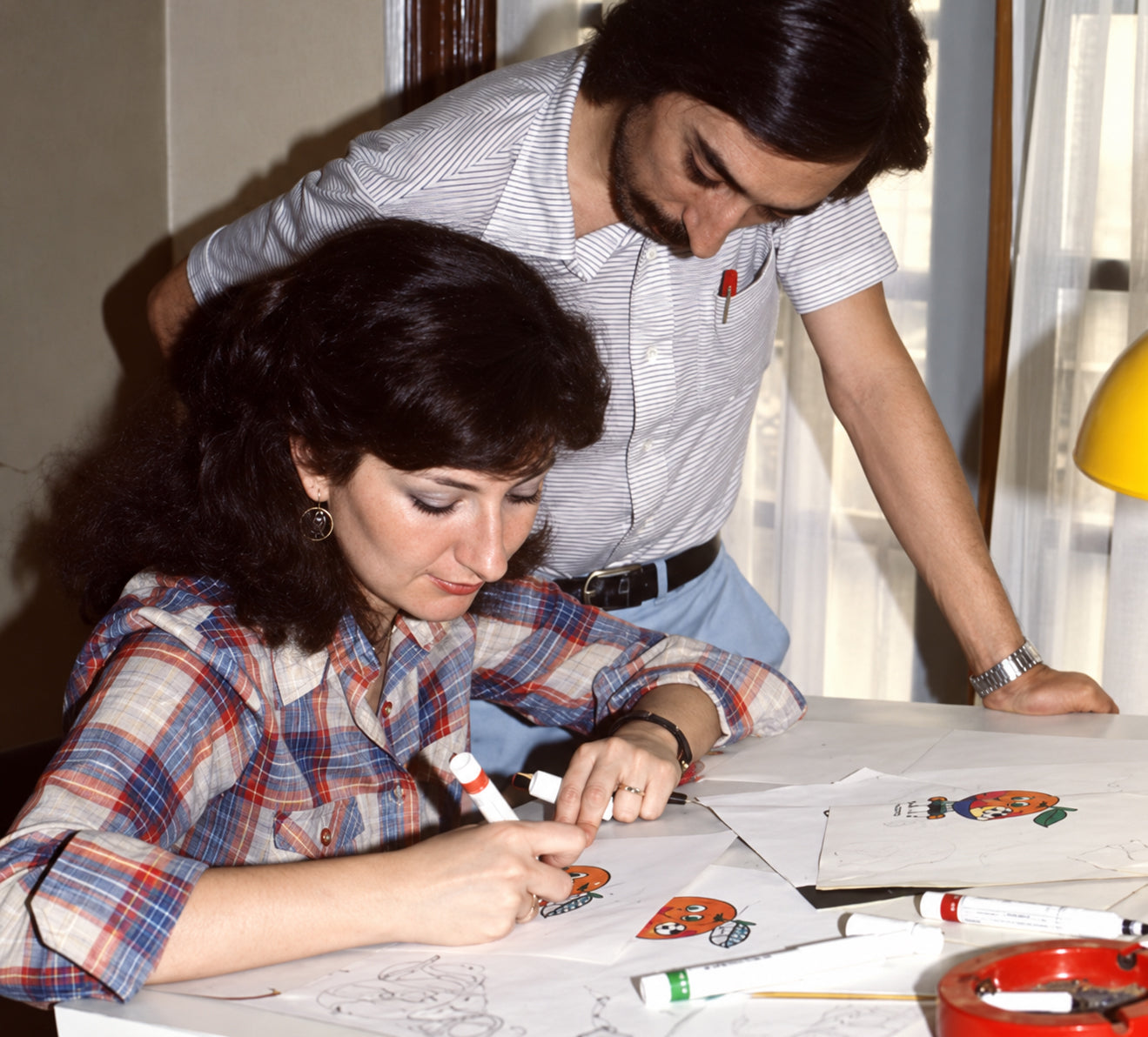
Naranjito was created by Sevillian advertisers José María Martín Pacheco and María Dolores Salto Zamora, linked to the Bellido advertising agency.
The organizers of Spain '82 had called for a contest to choose the mascot that would represent the championship.
More than 500 proposals were submitted, but in the end, the jury chose that orange dressed as a footballer.
The creators received a prize of one million pesetas for the design.
However, the most interesting part was yet to come: Naranjito would end up becoming a huge merchandising and advertising machine.
Why was the Spain '82 mascot an orange?
The choice of an orange was no accident.
José María Martín Pacheco was looking for an image that would allow for distancing from the traditional Spanish clichés usually used to represent the country abroad.
Instead of resorting to the bull, flamenco, bullfighters, or hats, the designers opted for a product easily associated with Spain: the orange.
In addition to its connection to producing regions like Valencia, Murcia, or Andalusia, its creators wanted to convey a friendlier, more cheerful, and approachable image of the country.
Thus was born one of the strangest and, at the same time, most recognizable mascots in the history of the World Cups.
When was Naranjito presented?
Naranjito was chosen as the mascot of the World Cup in May 1979, three years before the championship began.
The World Cup in Spain would finally be held between June and July 1982, but the mascot needed time to become the face of the competition.
During those years, it began appearing on posters, stickers, toys, t-shirts, decals, school supplies, advertisements, and all kinds of products.
When the World Cup began, Naranjito was already practically everywhere.
Brindis and Toribalón: the mascots that could have replaced Naranjito
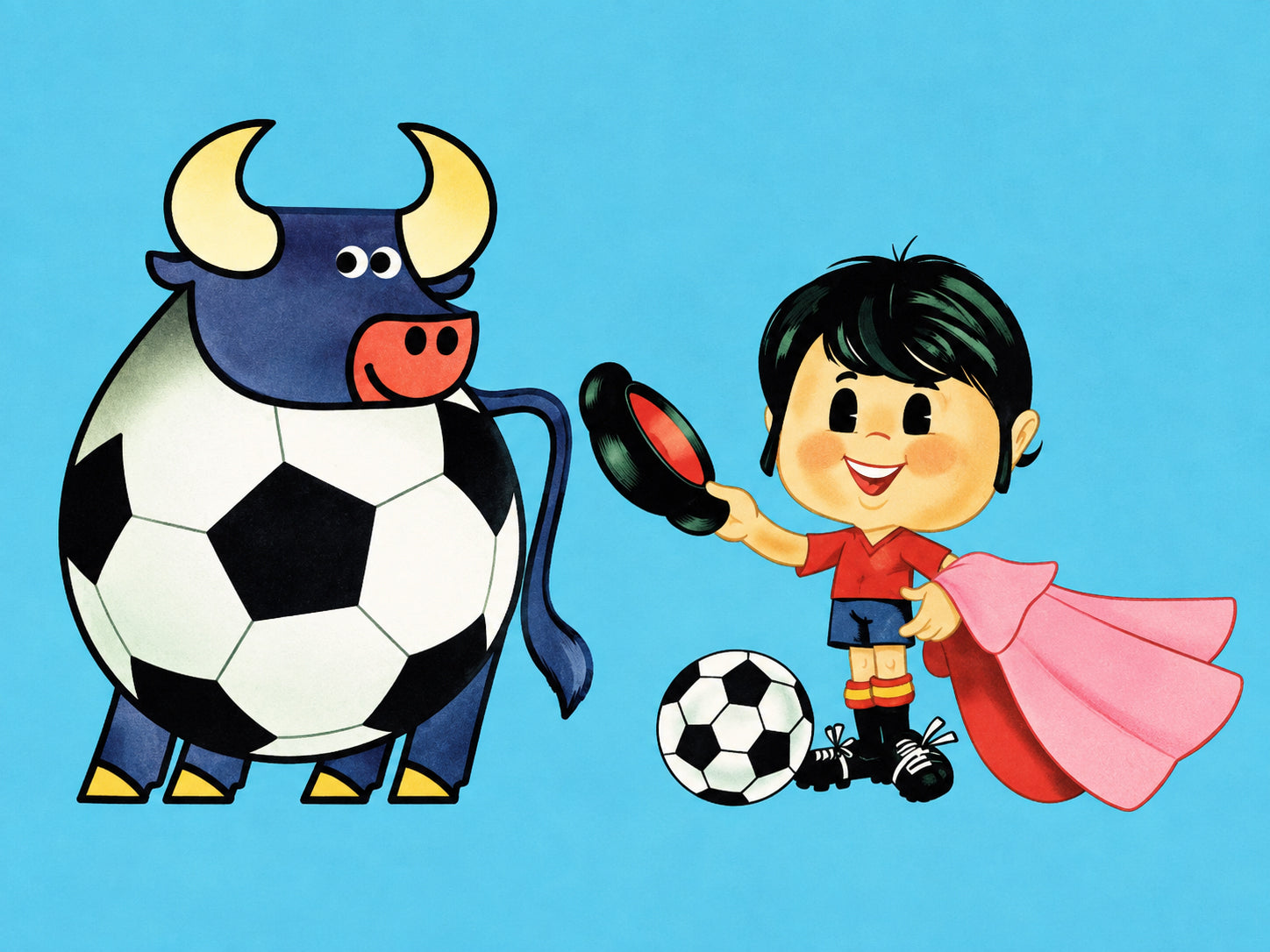
Naranjito was not the only proposal that reached the final stages of the contest.
Among its main rivals were two characters that represented a much more traditional vision of Spain.
One was Brindis, a boy dressed as a bullfighter.
The other was Toribalón, a peculiar combination of a bull and a football.
Finally, the orange won.
The decision is especially curious because one of the objectives of Naranjito's creators was precisely to break with the clichéd image of the bull and folkloric Spain.
Why was Naranjito so criticized at first?
Although today it is difficult to separate Spain '82 from Naranjito, its presentation generated quite a lot of controversy.
Part of the press, designers, and fans considered that an orange was too childish, simple, or not representative enough to become the face of an entire World Cup.
There were also those who preferred much more traditional Spanish symbols.
It was even compared to other television characters of the time, such as the famous Ruperta from Un, dos, tres... responda otra vez.
But something quite common with some popular icons happened: the more Naranjito appeared, the more familiar it became.
When the 1982 World Cup arrived, that mascot which had provoked so much criticism had already become a perfectly recognizable character to millions of Spaniards.
How much money did Naranjito generate?
This is one of the most surprising facts of its history.
While its designers received one million pesetas for winning the contest, the commercial exploitation of the character ended up moving much larger amounts.
According to data from the Spanish Football Federation itself, marketing rights related to Naranjito reached approximately 1.4 billion pesetas.
The character appeared on a huge number of items: dolls, t-shirts, candies, stickers, keychains, glasses, pennants, games, school supplies, and all kinds of souvenirs related to Spain '82.
Naranjito proved that a sports mascot could be much more than a drawing: it could also become a powerful commercial image.
Did Naranjito have a cartoon series?
Yes. And for many children who grew up in the early 80s, the cartoons are almost as memorable as the World Cup itself.
The series was titled Fútbol en acción and was broadcast by Televisión Española.
It consisted of 26 episodes of approximately 20 minutes in which Naranjito lived through different adventures related to football.
The series greatly helped transform the World Cup mascot into a children's character independent of the championship itself.
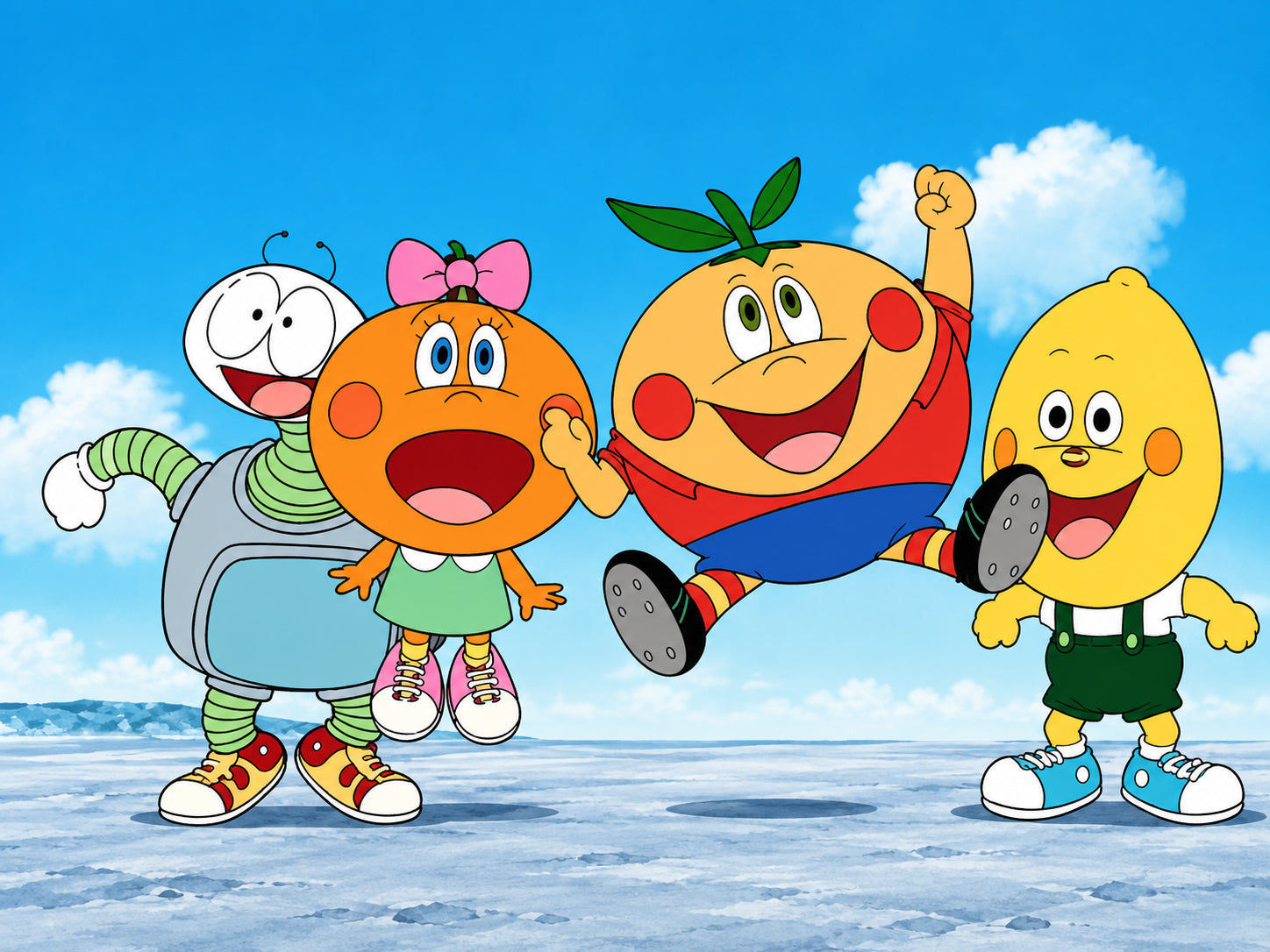
Who were Clementina, Citronio, and Imarchi?
Naranjito was not alone in Fútbol en acción.
Among the main characters was Clementina, his girlfriend, represented as a mandarin orange.
Also appearing was Citronio, a lemon who was part of Naranjito's group of friends.
Joining them was Imarchi, a peculiar robot that accompanied the protagonists in their adventures.
On the villains' side were Zruspa and the Cocos, who tried to make things difficult for Naranjito and his companions.
For an entire generation, names like Naranjito, Clementina, and Citronio became directly associated with the cartoon afternoons of the early 80s.
What did Alfredo Di Stéfano have to do with Naranjito?
The relationship between Fútbol en acción and real football went much further than it might seem.
The series had football-related advice from Alfredo Di Stéfano, one of the great legends of the sport.
The historic voice of Matías Prats also participated.
The intention was not only to entertain: some episodes also introduced rules, history, and concepts related to football.
Was Naranjito the only mascot of the '82 World Cup?
Here arises one of the most curious confusions of Spain '82.
Naranjito was the official mascot of the World Cup organized by Spain, but another character also had a starring role during the tournament: Sport Billy.
Sport Billy was a character related to sports that FIFA used as a symbol of fair play.
This caused both characters to share the spotlight during the championship, although their functions were different.
For Spanish fans, however, there were not many doubts: the image that ended up identifying that World Cup was Naranjito.
Spain '82: The Naranjito World Cup
The 1982 Spain World Cup was held from June 13 to July 11, 1982, and made the country the center of world football for almost a month.
The Spanish national team did not achieve the sporting result that many fans expected, and the title ended up in the hands of Italy.
But if there was one thing that was engraved in the Spanish collective memory, it was everything surrounding the championship: stadiums, sticker albums, television, advertising, and, of course, Naranjito.
For those who were children at that time, the mascot ended up being even more memorable than many of the matches.
10 facts about Naranjito you might not have known
- It was chosen in 1979, three years before the World Cup.
- Its design was selected from over 500 proposals.
- Its creators wanted to avoid the clichés of the bull and folkloric Spain.
- Its main rivals were Brindis and Toribalón.
- Its designers received one million pesetas.
- In its presentation at the time, Naranjito was described as a 12-year-old orange.
- It had its own television series, Fútbol en acción.
- His girlfriend was named Clementina and one of his friends was the lemon Citronio.
- The series had 26 episodes.
- Although it received a lot of criticism at first, today it is considered one of the great nostalgic icons of the 80s in Spain.
Why is Naranjito still so remembered?
Because it ended up representing much more than a football championship.
For those who lived through that era, Naranjito is related to childhood, sticker albums, television, cartoons, toys, and the aesthetics of the early 80s.
Its image also has something that works especially well with nostalgia: seeing it for a few seconds is enough to transport many people to a specific time.
That is why, more than four decades after Spain '82, Naranjito continues to appear in books, collectibles, exhibitions, clothing, and objects related to retro culture.
It went from being a heavily criticized mascot to becoming one of the most recognizable characters of an entire generation.
Naranjito, an icon of the EGB Generation
Naranjito shares memories with many other symbols that marked the childhood of those who grew up between the late 70s, the 80s, and the early 90s.
The test pattern, Espinete, the Bruja Avería, the Gallifante, EGB textbooks, or the TV series of that time are part of a common imagery that today returns turned into retro nostalgia.
And few images summarize that spirit better than a smiling orange dressed as a footballer.
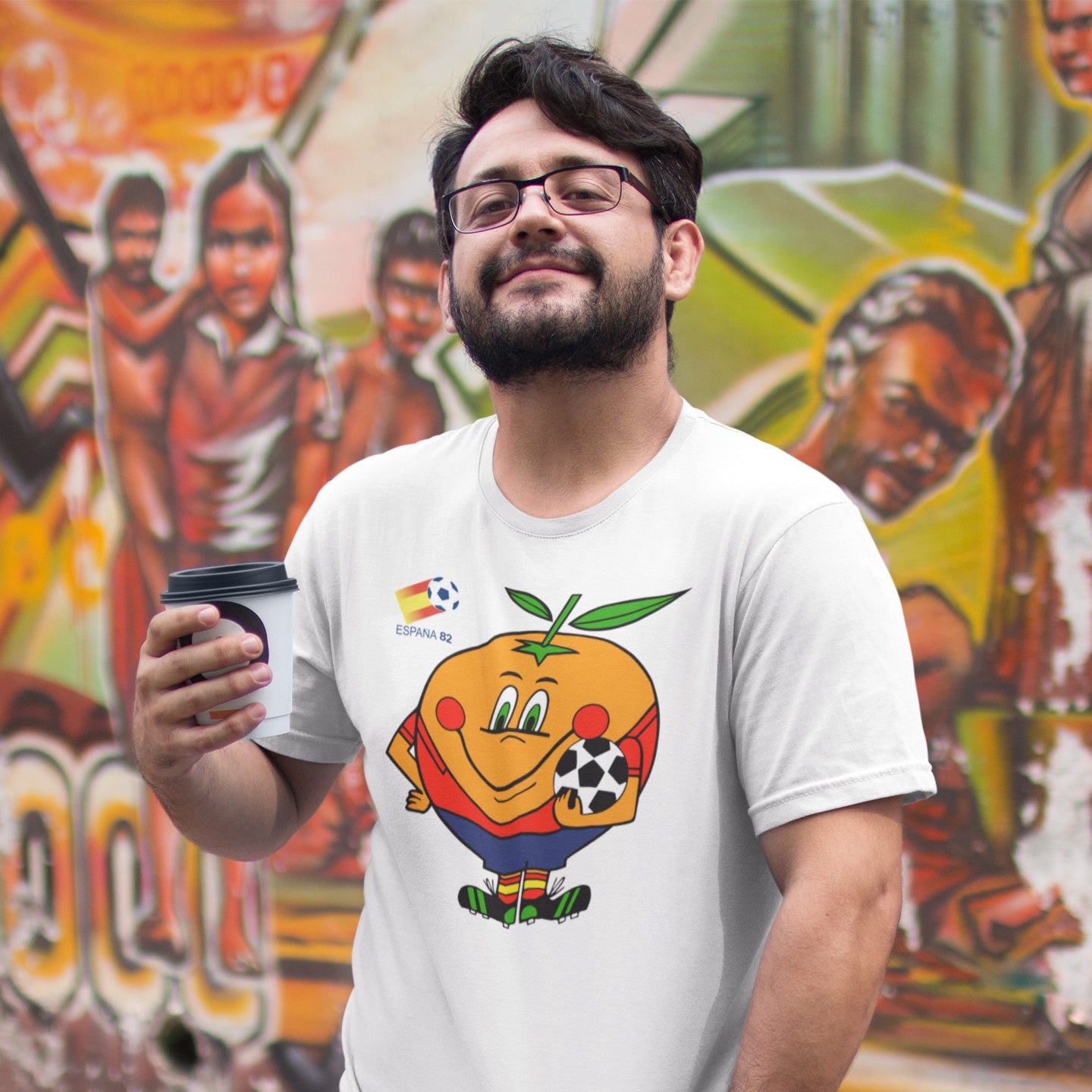
If you also grew up surrounded by these memories, you can discover our collection of EGB Generation and retro nostalgia t-shirts, inspired by some of the most remembered symbols of those years.